AT THE BOUNDARY OF LIVING TISSUE
Human Body
Studies report micro- and nanoplastics in human stool, blood, lungs, placentas, arteries and brains. How much is there is disputed, because some methods can mistake fats and glove residues for plastic. Lab studies find effects at the tested doses; human studies so far show associations, not causes.
Plastic particles have been reported in human stool, blood, lungs, placentas, artery plaque, livers and brains. How much is inside us is not settled. Since 2025, chemists have challenged the highest tissue values, arguing that fats and lab residues can mimic plastic. The original authors acknowledge method uncertainties but stand by their findings. Even intake is uncertain: the two best-known weekly estimates differ about a millionfold1,2. We found no study that establishes that these particles cause disease in people.
≈1,000,000×
gap between two published weekly intake estimates
4.1 µg/week (Mohamed Nor et al. 2021, model, particles 1–5,000 µm) vs up to 5 g/week (Senathirajah et al. 2021, literature conversion, 0–1 mm); ratio is our calculation1,2
both are estimates, not measurements
DDisputed1.6 µg/mL
mean plastic in blood, first quantification
mean over all 22 Dutch donors (values below the quantification limit set to zero; quantifiable in 17), double-shot py-GC/MS, particles ≥700 nm, published 20223,4,5
PE and PVC quantification by py-GC/MS in blood contested since 2025; the same group's 2025 method did not detect PE in 102 samples (detection limit 245 ng/mL)
DDisputed4,917 µg/g
median reported in 2024 frontal-cortex samples
24 New Mexico decedents who died October 2023 to January 2024, py-GC/MS after KOH digestion, Nihart et al. 20256,7,8
challenged in a Matters Arising; a 2026 study with lipid removal reported a median of 50.3 µg/g in five healthy brains (publisher's source-data file)
DDisputed4.53
hazard ratio, heart attack, stroke or death
257 of 304 enrolled carotid-surgery patients, Italy, about 34 months; polyethylene detected in plaque vs not9
observational association, not a cause
CLimited≈2,000 per mm²
false 'microplastics' left by dry glove contact
nitrile and latex lab gloves, IR and Raman library matching, environmental samples, University of Michigan, 202610
cleanroom nitrile gloves left about 100 per mm²
CLimitedParticles reach us by mouth and by breath
Swallowing and breathing are the two main routes: food and drinks reach the gut, and indoor air carries the smallest particles into the lungs1,11. Uptake through intact skin has not been demonstrated in living people; the studies we found use cells, skin models or sweat chemistry (level E; dated search record12).
The size of the dose is where estimates part ways. Mohamed Nor and colleagues modeled intake from eight food types and air. Their adult median is about 583 ng per day, roughly 4.1 µg per week (our calculation)1. Senathirajah and colleagues converted particle counts from 59 publications into mass and estimated 0.1–5 g per week. That is the peer-reviewed version of the "credit card a week" figure from a 2019 WWF report (level D)2,13.
Both are estimates; most of the gap comes from converting counts into grams, which depends on assumed size and density (our reading)2.
Weekly intake estimates for one adult, log scale
Data table
| label | value | unit | level | source |
|---|---|---|---|---|
| Mohamed Nor et al. 2021, adult median (model, 1–5,000 µm) | 0.0041 | mg/week | C | S-103 |
| Senathirajah et al. 2021, low end (literature conversion, 0–1 mm) | 100 | mg/week | D | S-104 |
| Senathirajah et al. 2021, high end ('credit card') | 5000 | mg/week | D | S-104 |
Counts describe some exposures better. Polypropylene infant bottles released up to 16.2 million particles per liter in lab tests, more after sterilization and with hot water. From that, Li and colleagues estimated 14,600 to 4.55 million particles per infant per day across 48 regions, a scenario estimate (level C)14.
In Toulouse homes and cars, median air concentrations of 1–10 µm particles were 528 and 2,238 per cubic meter. With published data, the authors estimated about 68,000 inhaled particles of that size per adult per day (level C)15.
Bottled water is the disputed case. Qian and colleagues imaged about 240,000 particles per liter, about 90% below 1 µm, in three brands16. Materić argued that the sample values fall below the procedural blank17; the authors replied that his proposed blank is itself contaminated (level D)18.
Where particles have been reported
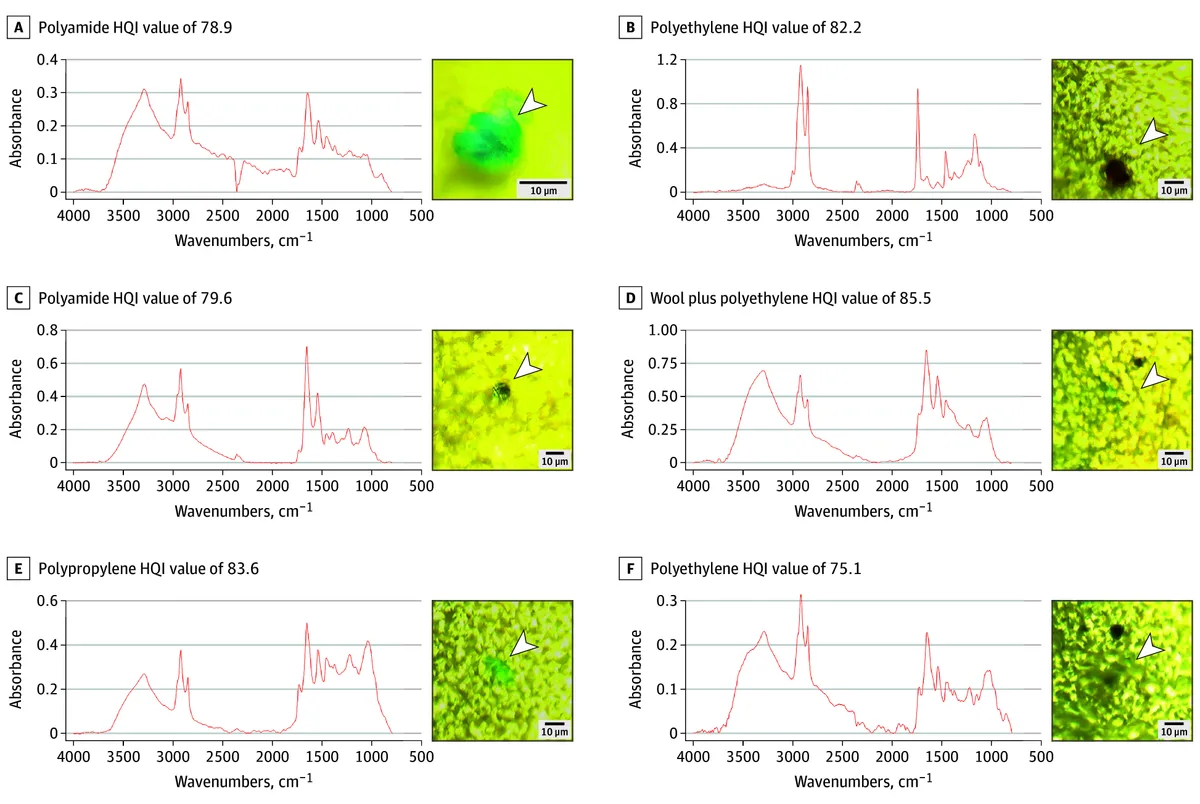
Particle-by-particle methods inspect each particle's spectrum and find microplastics a few micrometers and larger. Bulk methods such as pyrolysis gas chromatography with mass spectrometry (py-GC/MS) burn a digested sample and report polymer mass, without particle size; How We Measure It explains both. Each finding below gives sample size, method and size scope: the method's limit, or only the range of particles found.
In the gut, Schwabl and colleagues found microplastics of 50–500 µm in the stool of all 8 volunteers in 2019, a median of 20 per 10 g (level C)19. In the lungs, Jenner and colleagues found 39 particles in 11 of 13 surgical samples (µFTIR, 3 µm limit). Blank correction halved the count per gram (level C)20. Microplastics of 5.5–26.4 µm were found in the olfactory bulb of 8 of 15 São Paulo decedents (level C)21.
In 4 of 6 Italian placentas, Ragusa and colleagues found 12 pigmented fragments of 5–10 µm; only 3 were identified as a polymer (level C)22. At least four independent groups using single-particle spectroscopy report microplastics in stool, lung, placenta and olfactory bulb. Presence in the body is well supported (level B), but each tissue rests on one or two small studies19,20,21,22.
For mass figures, Leslie and colleagues reported a mean of 1.6 µg/mL across 22 Dutch blood donors, quantifiable in 173. Garcia and colleagues reported 6.5–685 µg/g in 62 placentas, 54% of it polyethylene (PE)23; Hu and colleagues, 328 µg/g in 23 testes24. Nihart and colleagues reported a median of 4,917 µg/g in the frontal cortex of 24 New Mexico decedents who died in 2023–20246.
Samples from different people who died in 2016 gave 3,345 µg/g, a cross-sectional comparison, not accumulation within people, and 12 dementia cases 26,076 µg/g; a later lipid-removal step reduced the dementia values, the supplement notes6. All these figures rest on py-GC/MS, and most on PE as a main polymer, which places them at the center of the dispute below (level D).
Where plastic particles have been reported in the human body
Data table
| label | value | unit | study | method | size_limit | level | source | n |
|---|---|---|---|---|---|---|---|---|
| route: breathing | inhaled particles reach lung tissue | Jenner et al. 2022; Yakovenko et al. 2025 | µFTIR; Raman air sampling | ≥3 µm (lung); 1–10 µm (air) | C | S-090, S-063 | ||
| route: eating and drinking | particles in stool | Schwabl et al. 2019 | µFTIR | 50–500 µm found | C | S-098 | ||
| route: skin | not demonstrated in people | site search, 3 November 2026 | Europe PMC search | not applicable | E | S-299 | ||
| stool | 8 of 8 participants | Schwabl et al. 2019 | µFTIR | 50–500 µm found (range of particles reported) | C | S-098 | 8 volunteers, Europe and Asia, 2019 | |
| lung tissue | 11 of 13 samples | Jenner et al. 2022 | µFTIR | ≥3 µm (method limit) | C | S-090 | 13 surgical samples, Hull, UK, 2022 | |
| placenta (particles) | 4 of 6 placentas | Ragusa et al. 2021 | Raman | 5–10 µm found; method limit not reported | C | S-088 | 6 placentas, Italy, 2021 | |
| placenta (mass) | 126.8 µg/g mean | Garcia et al. 2024 | py-GC/MS after saponification and ultracentrifugation | no size cutoff defined | D | S-089, S-042 | 62 placentas, USA, 2024 | |
| blood (mass) | 1.6 µg/mL mean across 22 donors; quantifiable in 17 | Leslie et al. 2022 | double-shot py-GC/MS | ≥700 nm (method scope) | D | S-087, S-042 | 22 donors, Netherlands, 2022 | |
| blood (mass, refined method) | 20% of samples above LOQ; 386 ng/mL mean of those; PE not detected | Nardella et al. 2025 | full-scan py-GC/MS | no size cutoff defined | C | S-043 | 102 samples, Netherlands, 2025 | |
| carotid plaque | PE in 150 of 257 patients, mean 21.7 ± 24.5 µg per mg plaque | Marfella et al. 2024 | py-GC/MS, stable isotopes, electron microscopy | not reported | D | S-093, S-094 | 257 of 304 enrolled, Italy, 2024 | |
| coronary blood | detected in 84% of STEMI, 40% of stable disease, 32% of normal arteries | Paolisso et al. 2026 | py-GC/MS, laser direct infrared (LDIR) | not reported in the abstract | C | S-296, S-297 | 61 patients, Italy, 2026 | |
| olfactory bulb | 8 of 15 decedents | Amato-Lourenço et al. 2024 | µFTIR | 5.5–26.4 µm found (range of particles reported) | C | S-091 | 15 autopsies, São Paulo, 2024 | |
| brain, frontal cortex (mass) | 4,917 µg/g median | Nihart et al. 2025 | py-GC/MS after KOH digestion, ATR-FTIR, electron microscopy | no size cutoff defined; shards mostly 100–200 nm seen by TEM | D | S-092, S-045, S-046, S-258 | 24 decedents, New Mexico, died 2023–2024 | |
| brain, healthy (mass) | 50.3 µg/g median | Li et al. 2026 | py-GC/MS after hot-ethanol lipid removal; LDIR particle counts | LDIR 20–500 µm; py-GC/MS no size cutoff | C | S-267, S-268 | 23 samples from 5 donors, Beijing, died 2024; plus 156 samples from 113 tumor patients | |
| liver (cirrhotic) | 6 patients positive, 5 controls negative | Horvatits et al. 2022 | Nile red, Raman | 4–30 µm (method range) | C | S-096 | 11 people, Germany, 2022 | |
| testis (mass) | 328 µg/g mean | Hu et al. 2024 | py-GC/MS | not reported | D | S-095, S-042 | 23 men, USA, 2024 | |
| ovarian follicular fluid | 14 of 18 women | Montano et al. 2025 | SEM-EDX | <10 µm measured | C | S-097 | 18 women, Salerno, Italy, 2025 |
Limitation
Detection is not harm, and most of these methods cannot see nanoplastics. Spectroscopy-based studies stop at about 3 µm (µFTIR) to 20 µm (LDIR); py-GC/MS reports mass but not particle size. The brain and carotid-plaque studies added electron microscopy of small particles, but their mass figures are the disputed ones.
The 2025–2026 measurement debate
The dispute is about false positives, not about whether plastic can enter the body. Rauert and colleagues found that, in human blood, fats and other compounds yield breakdown products that interfere with py-GC/MS signals for PE and polyvinyl chloride (PVC)4. Blood also suppressed signals: a reliable reading of polyethylene terephthalate (PET) needed 65 times the blank-based limit4. Their conclusion: the technique is "currently not a suitable analysis method for PE and PVC in biological matrices"4.
Brain tissue is fat-rich, which is why critics focus on it7. Glove residue is a second error: disposable gloves shed stearates that µ-Raman, µ-FTIR and py-GC/MS all misread as PE33. A 2026 University of Michigan study counted about 2,000 false particles per mm² after dry glove contact10. Two independent groups now report this glove artifact (level B)33,10.
On 13 November 2025, Monikh, Materić and colleagues published a Matters Arising on the brain study. They cite limited contamination controls and missing validation steps that "may affect the reliability of the reported concentrations"7.
Campen and coauthors replied in the same issue, acknowledging "the uncertainties in even the best current methods" and addressing the digestion method, possible interference from phospholipids and quality-control steps (level P)28. A 2026 paper summarizes their arguments: the lipid comparison mixes dry- and wet-weight percentages, polymers without known lipid interference rose too, and blanks held no detectable polymer34.
In September 2026 Campen said an added wash step gave results that "corroborate our initial findings"; no revised numbers had been published by then35. An author correction of 31 March 2025 had fixed duplicated supplementary images and scale bars; it changed no concentration (level P)29.
In April 2026, Li and colleagues in Beijing removed fats with hot ethanol before py-GC/MS, tested operating-room air and materials as blanks, and counted 20–500 µm particles by LDIR8. In 23 samples from five healthy donors' brains, the py-GC/MS median was 50.3 µg/g, about one hundredth of Nihart's 2024 median (level C; source data, our comparison)8.
A reviewer of that paper noted the hundredfold gap and asked whether its nitric acid digestion could damage PE and lower the result8. A correction of 24 April 2026 fixed rounding in figures only (level P)30. For carotid plaque, NEJM letters questioned operating-room contamination and the missing operating-room blanks25.
The Amsterdam blood group refined its method, using full-scan py-GC/MS on 102 samples. Plastic was detected in all, but only 20% had a polymer above the quantification limit; those averaged 386 ng/mL. PE was not detected, with a detection limit of 245 ng/mL (level C)5.
In January 2026 The Guardian counted seven challenged human-tissue studies, with "no suggestion of malpractice"; its analysis of 18 studies is the Rauert paper (level P)36,4. Spectroscopy with blanks, as in the lung study, is less exposed to the lipid problem, though not to glove residue (our reading). Tissue mass figures for brain, testis, placenta and blood remain disputed (level D)4,7,28,8.
What lab and animal studies find
Animal studies find effects at the tested doses. Kopatz and colleagues gave mice one oral dose of polystyrene (PS) spheres, 0.3 mg of each of three sizes. Particles of 293 nm, but not the larger ones, appeared in the brain within 2 hours (level C)37.
Huang and colleagues injected 100 µg of 5 µm fluorescent PS spheres once into the bloodstream of mice, aiming at about 50 µg/mL. Immune cells took them up and blocked brain capillaries, reducing blood flow and movement until recovery by day 28 (level C)38. Blockages appeared even at the lowest tested level, 5 µg/mL. The authors cite 12 µg/mL as a human blood value; such values are disputed, so this is no safety margin (our reading)38.
A 2024 rapid systematic review of 3 human and 28 animal studies, mostly in rodents, rated microplastics as "suspected" to harm sperm quality, gut immunity and lung function (level B)39. Both mouse studies used smooth PS spheres, while human samples mostly contain irregular fragments and fibers of polypropylene (PP), PET and PE19,20,6.
Additive chemicals are a separate hazard, outside this page; the 2025 Lancet Countdown on health and plastics set up indicators to track plastics' health harms across their life cycle40.
Human studies find associations, not causes
The strongest human signal comes from one prospective observational study. Marfella and colleagues enrolled 304 patients having surgery to remove carotid plaque, and 257 completed follow-up9. PE was detected in the plaque of 150 of them (58.4%), at a mean of 21.7 ± 24.5 µg per milligram of plaque. Over about 34 months these patients had a higher rate of heart attack, stroke or death: hazard ratio 4.53, 95% confidence interval 2.00–10.27 (level C)9.
The authors' conclusion describes a higher risk, not a cause9. In 2026 Paolisso and colleagues measured plastic in coronary and peripheral blood of 61 Italian patients by py-GC/MS and LDIR. It was detected in 84% of 19 with an acute heart attack (STEMI), 40% of 20 with stable coronary disease and 32% of 22 with normal arteries; PE predominated (level C)26.
That study is a snapshot with no follow-up, and not an independent replication: it shares senior authors with Marfella (author lists)26,9. Smoking was the only independent predictor of detectable plastic, odds ratio 5.69 (95% CI 1.33–26.63)26. A letter asked whether coronary plastic reflects earlier exposure or enrichment after the clot formed; the authors replied (level P)27,41.
An observational study shows that two things occur together. It cannot exclude a third factor such as smoking, diet or income, or reverse explanations, such as diseased tissue retaining more particles. Nihart and colleagues say so themselves: atrophy and a weaker blood–brain barrier in dementia could raise particle levels, so "no causality is assumed" (level P)6.
What an observational study can and cannot show
Data table
| label | value | unit | source |
|---|---|---|---|
| can show | plastic detected in plaque and heart attack, stroke or death occur together: hazard ratio 4.53 (95% CI 2.00–10.27), 257 patients, Marfella 2024 | S-093 | |
| cannot show alone | that plastic caused the outcome | S-093 | |
| alternative 1 | a third factor (smoking, diet, income) raises both exposure and risk; smoking predicted coronary plastic in a 2026 study | S-094, S-296 | |
| alternative 2 | disease changes tissue so it retains more particles (reverse direction) | S-092, S-297 | |
| alternative 3 | contamination or false positives create apparent exposure | S-094 |
Limitation
We found no human study that establishes that micro- or nanoplastics cause a disease (level E; dated search record12). That is a gap in evidence, not evidence of safety. WHO wrote in 2019 that firm conclusions on risk from drinking water "cannot yet be determined", although no data suggested overt health concerns from that route. Reviewing food and air exposure in 2022, it judged the available data "of only very limited use for assessing the risk" (level P)42,11.
What would settle it
Thomas and colleagues propose confidence levels for reported plastic in humans, requiring at least two orthogonal techniques, procedural blanks and shared raw data (level P)43; the proposal is untested. Interlaboratory comparisons on the same tissue samples, with known spiked amounts, would show which numbers survive. Recovery tests matter too: one blood method recovered 7–109% of spiked plastic, and realistic detection limits were up to 20 times those in clean water4.
The health question needs cohorts that measure plastic in body samples from people without the disease, then record new heart attacks, strokes or diagnoses and confounders. The prospective studies we found, such as Marfella's, enrolled patients who already had arterial disease9. We found no completed cohort of disease-free people with measured exposure and new clinical events (level E; dated search record12).
Open questions are tracked on Knowledge Gaps.
 Illustration
Questions
Is there plastic in my brain?
Possibly some, but the amount is disputed. One 2025 study reported milligram-per-gram levels in frontal cortex by py-GC/MS; critics argue that brain fats can mimic polyethylene, and the authors acknowledge method uncertainties while standing by their findings (level D,6,7,28). A 2026 study that removed fats first reported about one hundredth of that level in five healthy brains (level C,8). Headlines about "a spoonful of plastic in the brain" extrapolate from the disputed number. Spectroscopy found a few microplastic particles in the olfactory bulb of 8 of 15 people (level C,21).
Should I get my blood tested for microplastics?
Do microplastics cause heart attacks or dementia?
That is not established. One study found a higher rate of heart attack, stroke or death in patients with plastic detected in artery plaque, an association that does not prove cause (level C,9). A 2026 snapshot study found plastic more often in the coronary blood of heart-attack patients, but smoking predicted detection and the design cannot show cause (level C,26). Higher brain values in dementia could follow from the disease (level C,6).
Why do numbers for the same tissue differ so much?
Methods differ in what they see: spectroscopy counts particles above a few micrometers, while py-GC/MS reports total mass and can be inflated by fats or glove residues (level B,4,33). Blanks, recovery and digestion steps also vary between labs (43). Brain medians from two labs differ about a hundredfold (level D,6,8).
What do health agencies say?
WHO's 2019 drinking-water report found no data suggesting overt health concerns but said firm conclusions on risk could not yet be drawn; its 2022 report judged data on food and air exposure of only very limited use for risk assessment (level P,42,11). Both statements describe missing data; neither shows that exposure is safe.
Where to go next
Instruments and their limits are on How We Measure It, size classes on What Is Nanoplastic and study summaries on Landmark Studies. Practical steps are on What You Can Do, blood-cleaning trials on Solutions by System.
Sources
- Mohamed Nor NH, Kooi M, Diepens NJ, Koelmans AA (2021). Lifetime Accumulation of Microplastic in Children and Adults. Environmental Science & Technology. doi:10.1021/acs.est.0c07384 journal article
- Senathirajah K, Attwood S, Bhagwat G, Carbery M, Wilson S, Palanisami T (2021). Estimation of the mass of microplastics ingested – A pivotal first step towards human health risk assessment. Journal of Hazardous Materials. doi:10.1016/j.jhazmat.2020.124004 journal article
- Leslie HA, van Velzen MJM, Brandsma SH, Vethaak AD, Garcia-Vallejo JJ, Lamoree MH (2022). Discovery and quantification of plastic particle pollution in human blood. Environment International. doi:10.1016/j.envint.2022.107199 journal article open access
- Rauert C, Charlton N, Bagley A, Dunlop SA, Symeonides C, Thomas KV (2025). Assessing the Efficacy of Pyrolysis–Gas Chromatography–Mass Spectrometry for Nanoplastic and Microplastic Analysis in Human Blood. Environmental Science & Technology. doi:10.1021/acs.est.4c12599 journal article open access
- Nardella F, Brits M, van Velzen MJM, Scibetta L, Durkin A, Vermeulen R et al. (2025). Advancing pyrolysis-gas chromatography-mass spectrometry for the accurate quantification of micro- and nanoplastics in human blood. Microplastics and Nanoplastics. doi:10.1186/s43591-025-00152-7 journal article open access
- Nihart AJ, Garcia MA, El Hayek E, Liu R, Olewine M, Kingston JD et al. (2025). Bioaccumulation of microplastics in decedent human brains. Nature Medicine. doi:10.1038/s41591-024-03453-1 journal article
- Abdolahpur Monikh F, Materić D, Valsami-Jones E, Grossart HP, Altmann K, Holzinger R et al. (2025). Challenges in studying microplastics in human brain. Nature Medicine. doi:10.1038/s41591-025-04045-3 journal article
- Li R, Lin F, Zhao X, Wang J, Teng M, Li C et al. (2026). Microplastics and nanoplastics in brain tumours and the healthy human brain. Nature Health 1:633–646 (online 20 April 2026). doi:10.1038/s44360-026-00091-4 journal article
- Marfella R, Prattichizzo F, Sardu C, Fulgenzi G, Graciotti L, Spadoni T et al. (2024). Microplastics and Nanoplastics in Atheromas and Cardiovascular Events. New England Journal of Medicine. doi:10.1056/NEJMoa2309822 journal article
- Clough ME, Ochoa Rivera E, Ayala AM, Parham RL, Pennacchio J, Thurber HE et al. (2026). Avoiding and reducing microplastic false positives from dry glove contact. Analytical Methods 18:2914–2926. doi:10.1039/d5ay01801c journal article open access
- World Health Organization (2022). Dietary and inhalation exposure to nano- and microplastic particles and potential implications for human health. World Health Organization, Geneva. www.who.int/publications/i/item/9789240054608 report open access
- Nanoplastics planetary observatory (2026). Dated literature and registry search record for the Human Body page (negative findings). Nanoplastics planetary observatory (site methodology record). Methods record on this site site record open access
- Dalberg Advisors, de Wit W, Bigaud N, WWF (2019). No Plastic in Nature: Assessing Plastic Ingestion from Nature to People. WWF International / University of Newcastle (Australia). www.newcastle.edu.au/news/2019/06/plastic-ingestion-by-people-could-be-equating-to-a-credit-card-a-week press open access
- Li D, Shi Y, Yang L, Xiao L, Kehoe DK, Gun’ko YK et al. (2020). Microplastic release from the degradation of polypropylene feeding bottles during infant formula preparation. Nature Food. doi:10.1038/s43016-020-00171-y journal article
- Yakovenko N, Pérez-Serrano L, Segur T, Hagelskjaer O, Margenat H, Le Roux G et al. (2025). Human exposure to PM10 microplastics in indoor air. PLOS One. doi:10.1371/journal.pone.0328011 journal article open access
- Qian N, Gao X, Lang X, Deng H, Bratu TM, Chen Q et al. (2024). Rapid single-particle chemical imaging of nanoplastics by SRS microscopy. Proceedings of the National Academy of Sciences. doi:10.1073/pnas.2300582121 journal article
- Materić D (2024). Nanoplastics measurements must have appropriate blanks. Proceedings of the National Academy of Sciences 121(48). doi:10.1073/pnas.2411099121 journal article open access
- Qian N, Stapleton P, Yan B, Min W (2024). Reply to Materić: Appropriate blanks should avoid major contamination sources in the lab. Proceedings of the National Academy of Sciences 121(48). doi:10.1073/pnas.2415874121 journal article open access
- Schwabl P, Köppel S, Königshofer P, Bucsics T, Trauner M, Reiberger T et al. (2019). Detection of Various Microplastics in Human Stool. Annals of Internal Medicine. doi:10.7326/M19-0618 journal article
- Jenner LC, Rotchell JM, Bennett RT, Cowen M, Tentzeris V, Sadofsky LR (2022). Detection of microplastics in human lung tissue using μFTIR spectroscopy. Science of The Total Environment. doi:10.1016/j.scitotenv.2022.154907 journal article open access
- Amato-Lourenço LF, Dantas KC, Júnior GR, Paes VR, Ando RA, de Oliveira Freitas R et al. (2024). Microplastics in the Olfactory Bulb of the Human Brain. JAMA Network Open. doi:10.1001/jamanetworkopen.2024.40018 journal article open access
- Ragusa A, Svelato A, Santacroce C, Catalano P, Notarstefano V, Carnevali O et al. (2021). Plasticenta: First evidence of microplastics in human placenta. Environment International. doi:10.1016/j.envint.2020.106274 journal article open access
- Garcia MA, Liu R, Nihart A, El Hayek E, Castillo E, Barrozo ER et al. (2024). Quantitation and identification of microplastics accumulation in human placental specimens using pyrolysis gas chromatography mass spectrometry. Toxicological Sciences. doi:10.1093/toxsci/kfae021 journal article
- Hu CJ, Garcia MA, Nihart A, Liu R, Yin L, Adolphi N et al. (2024). Microplastic presence in dog and human testis and its potential association with sperm count and weights of testis and epididymis. Toxicological Sciences. doi:10.1093/toxsci/kfae060 journal article
- Correspondence (multiple letter authors) (2024). Microplastics and Nanoplastics in Atheromas. New England Journal of Medicine. doi:10.1056/nejmc2404154 journal article
- Paolisso P, Scisciola L, Belmonte M, Scarsini R, Galli V, Gallinoro E et al. (2026). Micro- and nano-plastics in the coronary circulation and air pollution exposure in ischaemic heart disease presentation. European Heart Journal 47(39):5860-5876. doi:10.1093/eurheartj/ehag447 journal article
- Qin J, Chen T, Qu L (2026). Coronary micro- and nanoplastics in ST-segment elevation myocardial infarction: antecedent exposure or post-thrombotic enrichment?. European Heart Journal (correspondence, online 27 October 2026). doi:10.1093/eurheartj/ehag800 journal article
- Campen MJ, West AB, Garcia M, Gullapalli R, El Hayek E (2025). Reply to: Challenges in studying microplastics in human brain. Nature Medicine. doi:10.1038/s41591-025-04046-2 journal article
- Nihart AJ, Garcia MA, El Hayek E, Liu R, Olewine M, Kingston JD et al. (2025). Author Correction: Bioaccumulation of microplastics in decedent human brains. Nature Medicine 31:1367 (online 31 March 2025). doi:10.1038/s41591-025-03675-x journal article open access
- Li R, Lin F, Zhao X, et al. (2026). Author Correction: Microplastics and nanoplastics in brain tumours and the healthy human brain. Nature Health 1:666 (online 24 April 2026). doi:10.1038/s44360-026-00132-y journal article open access
- Horvatits T, Tamminga M, Liu B, Sebode M, Carambia A, Fischer L et al. (2022). Microplastics detected in cirrhotic liver tissue. eBioMedicine. doi:10.1016/j.ebiom.2022.104147 journal article open access
- Montano L, Raimondo S, Piscopo M, Ricciardi M, Guglielmino A, Chamayou S et al. (2025). First evidence of microplastics in human ovarian follicular fluid: An emerging threat to female fertility. Ecotoxicology and Environmental Safety. doi:10.1016/j.ecoenv.2025.117868 journal article open access
- Witzig CS, Földi C, Wörle K, Habermehl P, Pittroff M, Müller YK et al. (2020). When Good Intentions Go Bad—False Positive Microplastic Detection Caused by Disposable Gloves. Environmental Science & Technology 54:12164-12172. doi:10.1021/acs.est.0c03742 journal article
- Viola, Makdissi, Musacchio, Aliprandi, Franco Taveras, Mayer et al. (2026). Healthy mice show resilience to chronic nano- and microplastic exposure in the brain. Frontiers in Immunology 17:1917614. doi:10.3389/fimmu.2026.1917614 journal article open access
- Dance A (2026). Measuring plastic in the brain: improving but incomplete. The Transmitter (Simons Foundation), 18 September 2026. www.thetransmitter.org/microplastics/measuring-plastic-in-the-brain-improving-but-incomplete/ press open access
- Carrington D (2026). 'A bombshell': doubt cast on discovery of microplastics throughout human body. The Guardian, 13 January 2026. www.theguardian.com/environment/2026/jan/13/microplastics-human-body-doubt press open access
- Kopatz V, Wen K, Kovács T, Keimowitz AS, Pichler V, Widder J et al. (2023). Micro- and Nanoplastics Breach the Blood–Brain Barrier (BBB): Biomolecular Corona’s Role Revealed. Nanomaterials. doi:10.3390/nano13081404 journal article open access
- Huang H, Hou J, Li M, Wei F, Liao Y, Xi B (2025). Microplastics in the bloodstream can induce cerebral thrombosis by causing cell obstruction and lead to neurobehavioral abnormalities. Science Advances. doi:10.1126/sciadv.adr8243 journal article open access
- Chartres N, Cooper CB, Bland G, Pelch KE, Gandhi SA, BakenRa A et al. (2024). Effects of Microplastic Exposure on Human Digestive, Reproductive, and Respiratory Health: A Rapid Systematic Review. Environmental Science & Technology. doi:10.1021/acs.est.3c09524 review
- Landrigan PJ, Dunlop S, Treskova M, Raps H, Symeonides C, Muncke J et al. (2025). The Lancet Countdown on health and plastics. The Lancet. doi:10.1016/S0140-6736(25)01447-3 review
- Marfella R, Barbato E, Paolisso G (2026). Micro- and nanoplastics in acute coronary thrombosis: exposure, enrichment, or a dual mechanism?. European Heart Journal (correspondence, online 27 October 2026). doi:10.1093/eurheartj/ehag803 journal article
- World Health Organization (2019). Microplastics in drinking-water. World Health Organization, Geneva. www.who.int/publications/i/item/9789241516198 report open access
- Thomas KV, Belz S, Booth AM, Clift MJD, Cross RK, Davies G et al. (2026). Communicating Confidence in the Reliability of Micro- and Nanoplastic Identification in Human Health Studies. Environment & Health. doi:10.1021/envhealth.5c00671 journal article
Evidence levels and provenance
- AConsensus
- Multiple independent studies or a systematic review plus a statement by a scientific body.
- BWell supportedUsed on this page
- Several independent studies with concordant findings.
- CLimitedUsed on this page
- Few studies, narrow conditions, or methodological caveats.
- DDisputedUsed on this page
- Conflicting results; both sides are shown.
- EUnknownUsed on this page
- No reliable evidence found; the search scope is stated.
- PProvenanceUsed on this page
- Provenance: checked against the primary record. A separate category, not an evidence grade: used for bibliographic facts, legal texts, official metadata, definitions quoted from a standard, the site's own arithmetic and statements about the site's process.
Editorial categories of this site. A–E grade scientific findings, per claim, with a one-line rationale; D and E are not lower rungs of the A–C scale. P is not a grade: it marks facts checked against their primary record.