WHAT WORKS, WHERE, AND HOW FAR
Solutions by System
In the evidence we searched, none of the four systems (air, water, soil, human body) has a proven complete solution for micro- and nanoplastics. Filters and treatment plants retain many particles from the air or water passing through them, and what they retain still goes somewhere.
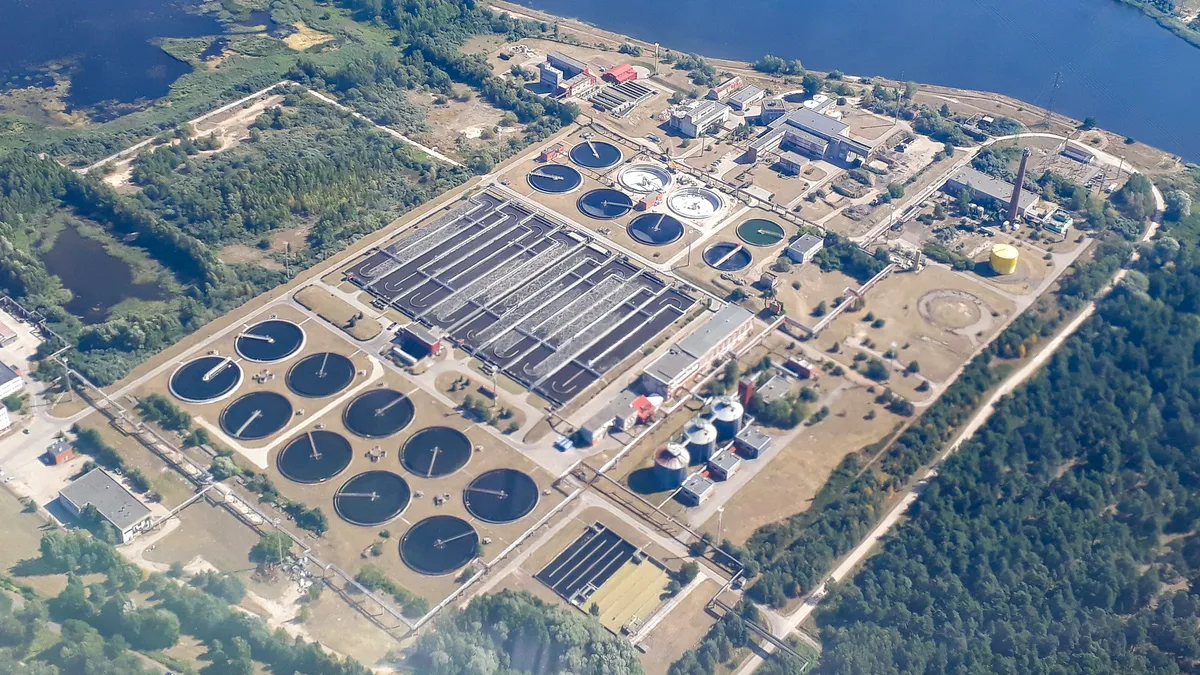
In the evidence we searched, no method removes micro- or nanoplastics from open air, open water, field soil or the human body at the scale of the whole system. That is why this site counts 0 of 4 complete solutions. What works is local and conditional: filters and treatment plants retain much of the plastic in the air or water that passes through them. Three Australian wastewater plants removed 91–96% of the nanoplastic mass they received (level C)1.
The open question is where retained plastic goes next. Plants concentrate it in sewage sludge2. A 2016 estimate put the microplastics spread on farmland with sludge in Europe and North America at 107,000–730,000 metric tons (t) a year. That is comparable to or larger than the 93,000–236,000 t then estimated to float at the ocean surface (estimates, level C)3.
Why the count stays at 0 of 4
We call a method a complete solution only if it meets four conditions. It works on dispersed particles at the scale of the whole system. It covers nanoplastics (below 1 µm), not only visible microplastics. It has been shown outside the laboratory. And it does not just move particles into another system. We found no method that meets all four for air, water, soil or the human body (level E; searches listed at the end of this page).
The home cards therefore say "no proven removal at scale" in words, not as a percentage; 0 of 4 counts the systems meeting all four conditions. The percentages below are local results, each from one device, plant or experiment under stated conditions.
Each system section gives the technology status (none, laboratory, pilot, deployed locally), the best result with its conditions, and why it falls short. Laws are not rated on this scale; their legal status is given separately.
P marks facts checked against a primary record, such as a legal text, a filter rating or our arithmetic. What is found in each system is on Evidence by System; the cross-system comparison is on Solutions by Approach.
≥99.97%
HEPA filter rating at the hardest particle size to catch
particles of 0.3 µm passing through the filter medium; theoretical rating, US EPA; larger and smaller particles are trapped more efficiently; not a room result4
a property of the filter, not of the air in a room or a city
PProvenance99.5%
model nanoplastics retained in the first 0.9 m of a pilot rapid sand filter
palladium-labeled core-shell model nanoplastics (about 164 nm), spiked into Lake Zurich water, 9-hour run, pilot plant at the Zurich Water Works; Pulido-Reyes et al. 20225
measured in a pilot; the often-quoted ≈99.9% for slow sand filtration is a model result, not a measurement
CLimited91–96%
nanoplastic mass removed in three wastewater plants
nine polymers, 0.01–1 µm, influent vs effluent, py-GC/MS; three municipal plants in Australia; Okoffo & Thomas 20241
retained mass moves to sludge; still about 0.7–24 kg of nanoplastics released per plant per year (estimate)
CLimited≈60%
lower nanoplastic concentration in lettuce leaves with iron-doped biochar
pot experiment, 3 wt% biochar in soil, palladium-doped nanoplastics, leaf concentration 0.90 → 0.36 mg/kg (mass basis and particle size not given in the abstract); Aly et al. 20266
binding in soil, not removal from soil
CLimitedLimitation
None of these numbers is a share of the environment cleaned. Ratings, tracer experiments and plant measurements use different particles, sizes and units (counts or mass), so they cannot be compared directly or added together.
Air: filters clean only the air that passes through them
We found no method that removes micro- or nanoplastics from outdoor air at any scale; laboratory chamber tests exist (level E; search 1 below). Even the size of the airborne load is unsettled. Evangelou and colleagues compared a global set of measurements with models and found the models overestimated median atmospheric microplastic concentrations by two to four orders of magnitude (level C)7.
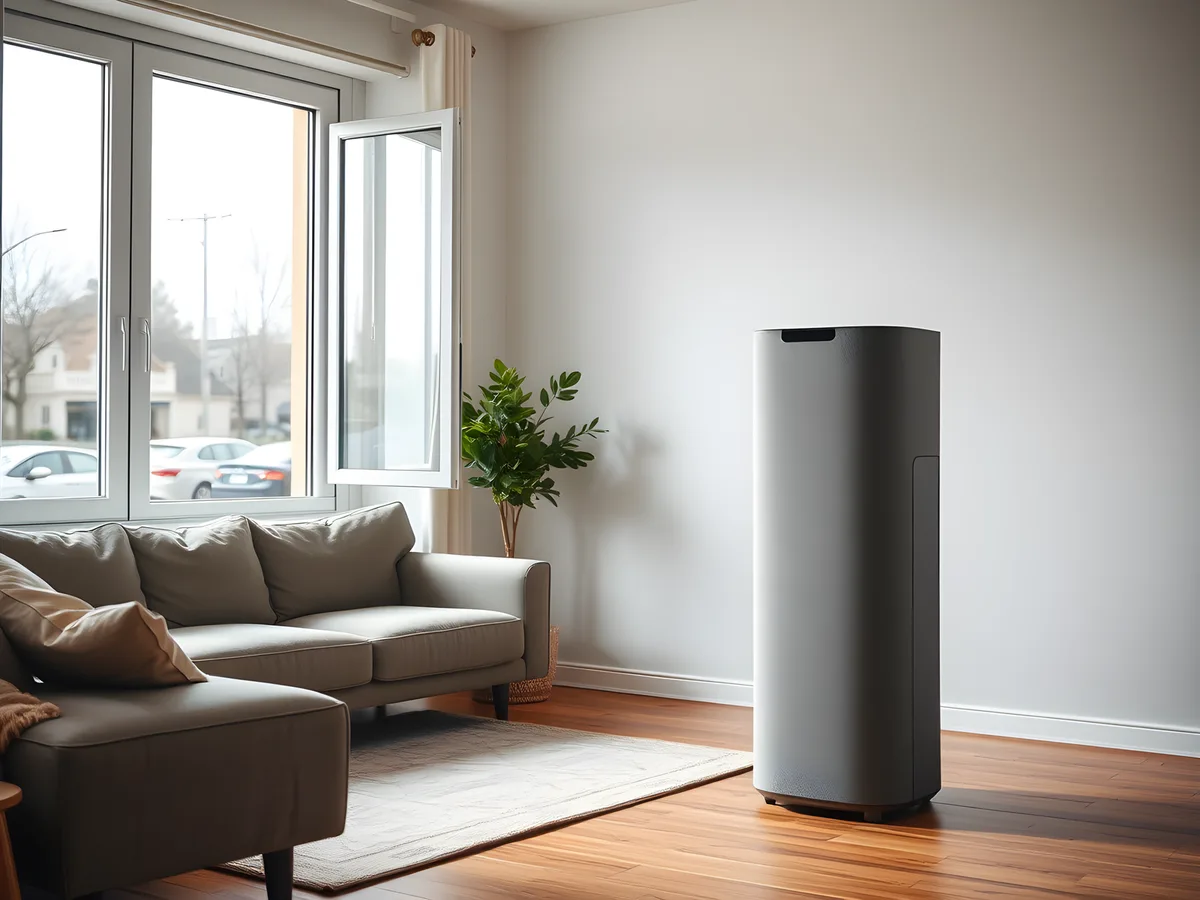
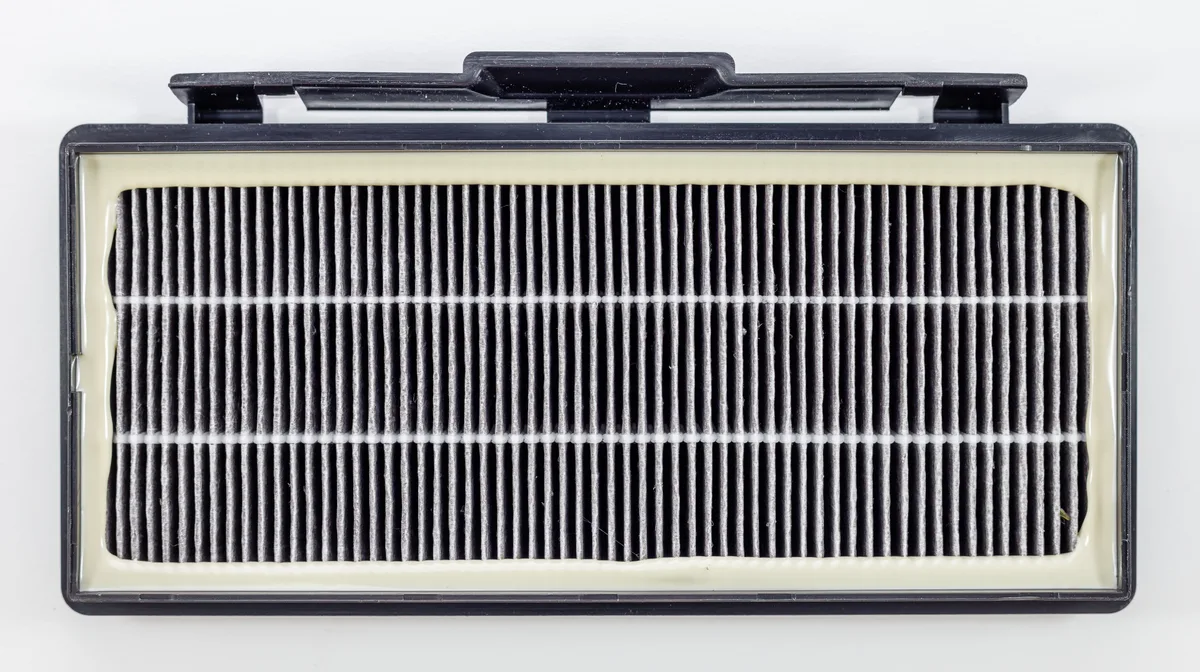
Indoors, filtration works on the air that reaches the filter. The US EPA describes a HEPA filter as theoretically removing at least 99.97% of particles of 0.3 µm, the most penetrating size. Larger or smaller particles are trapped even more efficiently (level P)4. How much cleaner a room becomes depends on airflow, room volume, running time and what keeps shedding particles inside it.
Two office studies illustrate that gap, with different endpoints. In a small windowless office in Malaysia, deposited microplastic counts fell by about 35% on days an air purifier ran (level C)8. In an office in Taiwan, airborne indoor-to-outdoor microplastic ratios were lower with an air cleaner running, but higher when electric fans ran at the same time (level C)9.
Identification and Mitigation of Deposited Indoor Air Microplastics in an Office Environment in Kuala Lumpur
Dewika and colleagues sampled deposited particles in a 28.9 m³ windowless university office in Petaling Jaya over eight weeks, 170 samples, with an air purifier switched on or off and vents open or closed. Microplastic counts fell by about 35% with the purifier running (1,274 to 826 with vents open).
Limits: a conference paper, one room, deposition rather than inhaled air, visual counting with hot-needle checks (particles tens of micrometers and larger), no nanoplastics, and a co-author from a purifier manufacturer. A 2026 office study measured airborne ratios instead and found that fans can cancel the effect9.
Read the study ↗Outdoors, the working lever is the source. Tire wear emissions are estimated at 0.23–4.7 kg per person per year, with a global average of 0.81 kg (estimate, level B)10. In size-fractionated street air in Leipzig, tire wear made up about 65% of the plastic mass in particles below 10 µm (level C)11.
The EU's Euro 7 regulation caps brake particles (PM10, all brake dust, not only plastic). Until the end of 2029 the limit is 7 mg/km for most new cars and vans and 3 mg/km for battery-electric ones; heavier N1 Class III vans have 11 mg/km, or 5 mg/km if battery-electric. From 2035 it is 3 mg/km for all (level P)12.
Euro 7 is adopted and in force and applies to new car and van types from 29 November 2026, so on 3 November 2026 it was not yet applying. Its tire abrasion table is still empty in the consolidated text of 2 September 2026 (level P)12.
A draft UN Regulation No. 186 on passenger-car tire abrasion, agreed at the June 2026 session of the UN vehicle forum WP.29, was notified on 30 July 2026. It counts as adopted unless more than one-fifth of the parties object within six months (level P)13,14. Details are on Policy & Regulation. Technology status: removal none; source limits not rated; no measured effect on airborne plastic yet.
 Illustration
Water: plants retain most particles, open water keeps them
Drinking water
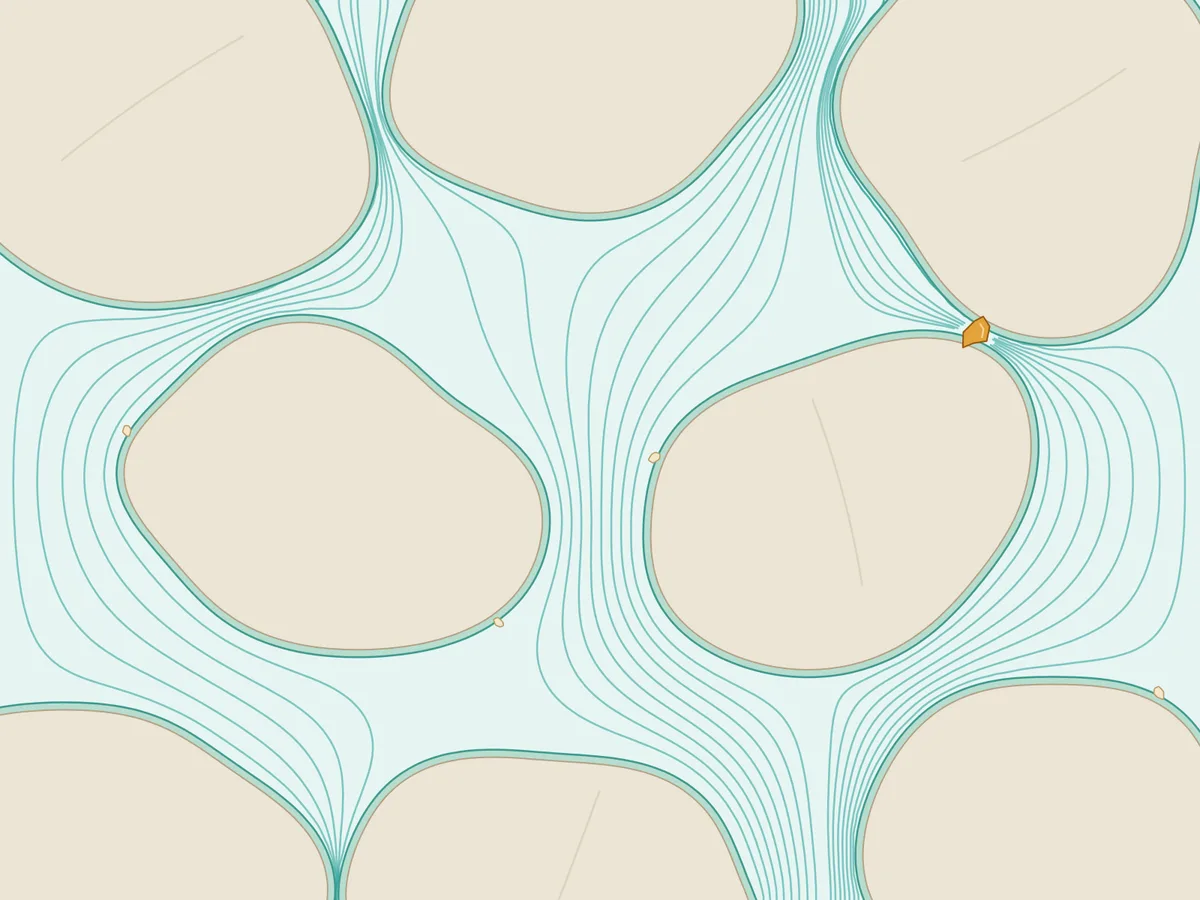
Drinking-water plants supply the strongest nanoscale results. Pulido-Reyes and colleagues at Eawag ran labeled model nanoplastics through laboratory filters and pilot filters at the Zurich Water Works (level C)5,15. Aged, biofilm-coated sand retained them best.
Nanoplastics removal during drinking water treatment: Laboratory- and pilot-scale experiments and modeling
Pulido-Reyes and colleagues (Eawag, 2022) spiked Lake Zurich water with palladium-labeled core-shell model nanoplastics (about 164–215 nm) and passed it through ozonation, sand and activated carbon filters in laboratory columns and in pilot rapid sand and carbon filters. Ozone hardly changed transport. In the pilot, the sand filter retained 99.5% of the particles in its first 0.9 m during a 9-hour run; the carbon filter retained 10%.
A model of the full Zurich treatment train then gave 3.6-log removal (0.4 rapid sand, 0.2 carbon, 3.0 slow sand), so the ≈99.9% for slow sand filtration is modeled. Limits: tracer particles at high concentration rather than environmental nanoplastics, one water source, short runs, and no slow sand filter tested at pilot scale.
Read the study ↗Mass Concentration and Removal Characteristics of Microplastics and Nanoplastics in a Drinking Water Treatment Plant
Xu and colleagues (2024) measured plastic mass by py-GC/MS at each step of a full-scale drinking-water plant, in three size classes. Total polymer fell from 9.63 µg/L in raw water to 0.77 µg/L in treated water. Nanoplastics (0.01–1 µm) were only 3.2–5.3% of the polymer mass and were removed least well, at 88.9 ± 3.2%, against 92.9% for particles of 50–1,000 µm.
It matters because it measures real particles at full scale. Limits: one plant, a method open to matrix interference, and mass rather than particle counts.
Read the study ↗The two studies agree in direction: 99.5% of clean tracer particles in a pilot filter, about 89% of real nanoplastic mass at full scale. Regulatory monitoring of drinking water does not yet cover nanoplastics; the EU method starts at 20 µm (level P)17; see Policy & Regulation.
Wastewater and laundry
Wastewater plants retain most of the microplastics they receive. A review of 21 studies found average removal of about 88% in plants with secondary treatment and 94% with tertiary treatment, most of it in the preliminary and primary steps (level B)2. Membranes go further: a membrane bioreactor in Finland cut microplastics of 20 µm and larger from 6.9 to 0.005 particles per liter, a 99.9% reduction (level C)18.
Mass quantification of nanoplastics at wastewater treatment plants by pyrolysis–gas chromatography–mass spectrometry
Okoffo and Thomas (2024) measured the mass of nine polymers below 1 µm through three municipal wastewater plants in Australia by py-GC/MS. Total nanoplastic fell from 27.7, 18 and 9.1 µg/L in influent to 1, 1.4 and 0.8 µg/L in effluent, removal of about 96%, 92% and 91%. The plants still release an estimated 24, 2 and 0.7 kg of nanoplastics per year.
It is one of the first mass budgets of nanoplastics at full scale. Limits: three plants in one country, and py-GC/MS polymer identification that is debated for complex matrices.
Read the study ↗Capture can also start at the appliance. In laboratory tests of six devices, an external washing-machine filter reduced microfiber release to wastewater by about 78% (level C)19.
Washing Machine Filters Reduce Microfiber Emissions: Evidence From a Community-Scale Pilot in Parry Sound, Ontario
Erdle and colleagues (2021) installed washing-machine filters in 97 homes in Parry Sound, Ontario, about 10% of the households served by the town's wastewater plant. Microfibers in the treated final effluent fell significantly after installation. Filters caught an average of 6.4 g of lint per home per week, equivalent to 179,200–2,707,200 microfibers.
It is the first community-scale test of source capture. Limits: one small town, microfibers only, no nanoplastic measurement, and lint that still has to go to waste.
Read the study ↗France's filter obligation for new washing machines is covered on Policy & Regulation; household choices are on What You Can Do.
Open water
We found no method that removes dispersed nanoplastics from oceans, rivers, lakes or groundwater (level E; search 2 below). The largest cleanup operation, The Ocean Cleanup, reports more than 45 million kg (45,000 t) of trash removed from rivers and the ocean by December 2025. Over 25 million kg of it came in 2025 (self-reported, level C)21.
The OECD estimated about 30 million metric tons (30 Mt) of plastic in the ocean in 2019 (estimate, level C)22. Even if every kilogram had come from the sea, the cleanup total would be about 0.15% of that stock (our calculation from21 and22, level P). Much of the catch comes from rivers, so this is an upper bound, not a cleanup efficiency.
Those nets and river barriers catch floating coarse items; a nanoparticle passes straight through. Nanoplastics are a separate stock: one cruise extrapolated about 27 Mt in the mixed layer of the temperate to subtropical North Atlantic alone (estimate, level C)23. That figure is not comparable to the cleanup or OECD totals, which count different sizes and places.
 Illustration
Soil: prevention and binding, no removal
We found no method that removes dispersed micro- or nanoplastics from field soil. The studies we found test oxidation, washing or binding in the laboratory and in pots (level E; search 3 below). Once particles are mixed into the plow layer, there is no flow to filter.
Prevention therefore carries the load. Sewage sludge is a documented route: Nizzetto and colleagues estimated 63,000–430,000 t of microplastics a year reaching European farmland this way (estimate, level C)24,3. The FAO estimated about 12.5 million t of plastic products used each year in plant and animal production, with mulch films a main source of plastic left in soil (estimate, level C)25. Rules on sludge are on Policy & Regulation, and what is found in soil is on Soil.
The tested remediation is binding: amendments that hold particles in place and keep them out of crops.
Biochar Reduces Nanoplastics Uptake by Lettuce and Alleviates Its Toxicity to the Plant
Aly and colleagues (2026) grew lettuce in soil with palladium-doped nanoplastics and confirmed that particles entered roots and moved to leaves. Adding 3 wt% pine-sawdust biochar or iron-doped biochar lowered leaf nanoplastic concentrations; the iron-doped form cut them by about 60%, from 0.90 to 0.36 mg/kg, and eased metabolic stress.
It is the clearest recent result for crop protection. Limits: a pot experiment with model particles, one crop and one soil, and the nanoplastics stay in the soil. The abstract gives neither the mass basis nor the particle size; the full text is paywalled.
Read the study ↗Technology status: binding at laboratory (pot) scale; removal none.
Human body: no proven removal
We found no procedure shown to remove nanoplastics from the human body (level E; search 4 below). The evidence so far concerns microplastics counted in blood before and after filtering plasma outside the body.
Can Plasma Exchange Be Used to Lower the Circulating Burden of Microplastics in Human Patients?
Weinstein and colleagues (2026) measured circulating microplastics in 114 patients before and after 174 one-plasma-volume therapeutic plasma exchanges. Counts fell after treatment, but at low starting levels the reduction was hidden by particles leaching back into the blood from the plastic tubing set.
It is the first report of lower blood microplastics after a procedure. Limits: before-and-after measurements only, blood counts only, an assay for micrometer-sized particles with no nanoplastic data, and authors who work for a company offering the procedure.
Read the study ↗A preliminary 2026 report from Dresden describes double-filtration plasmapheresis in small groups. According to a news summary, polyethylene measured by py-GC/MS fell in all four patients tested, while polystyrene rose in one. A Nile Red count of nanoscale particles fell by about 70% in four patients, without statistical significance (level C)27,28. We could not read the full text.
Nile Red also stains fatty material that is not plastic. A 2025 method study found py-GC/MS unsuitable for polyethylene in blood because lipids create interfering signals (level C)29.
A registered pilot trial of double-filtration plasmapheresis (NCT07658443) plans 20 participants and lists micro- and nanoplastic counts as a primary outcome. The registry gives 12 June 2026 as the actual start date (sponsor-reported) and 1 August 2026 as the estimated primary completion. No results were posted when we checked on 3 November 2026 (level P)30. What the particles may do in the body is on Human Body.
Limitation
A lower count in a blood sample after one session is not removal from organs, not a lasting change and not evidence of health benefit. A trial registration is a plan, not a result.
Status by system at a glance
Solution status by system: how far each approach has got
Data table
| label | value | unit | system | best_result | source | legal_status |
|---|---|---|---|---|---|---|
| Air · removal from outdoor air | 0 | technology step (0 none, 1 lab, 2 pilot, 3 deployed locally) | air | none found | S-052 | |
| Air · indoor HEPA filtration | 3 | technology step | air | ≥99.97% at 0.3 µm (filter rating); about 35% fewer deposited microplastics in one office; lower indoor/outdoor ratio in another | S-127; S-171; S-172 | |
| Air · source limits (brakes, tires) | not rated (legal instrument) | air | brake PM10 limit 7 mg/km (3 mg/km battery-electric) to end-2029; no measured effect on airborne plastic yet | S-135; S-356 | Euro 7 adopted and in force; applies to new car and van types from 29 Nov 2026; EU tire limits not yet set; UN Regulation 186 draft notified 30 Jul 2026 | |
| Water · drinking-water treatment | 3 | technology step | water | 88.9% of nanoplastic mass, one full-scale plant; 99.5% of tracer nanoplastics in 0.9 m of a pilot rapid sand filter (≈99.9% for slow sand is modeled) | S-118; S-113 | |
| Water · wastewater treatment | 3 | technology step | water | 91–96% of nanoplastic mass, three plants; 88–94% of microplastics, 21-study review | S-047; S-381 | |
| Water · washing-machine filters | 2 | technology step | water | about 78% less microfiber release (lab); lower effluent microfibers in a 97-home pilot | S-125; S-167 | |
| Water · open-water cleanup (nanoplastics) | 0 | technology step | water | none found; coarse debris only, about 45,000 t to December 2025 | S-116 | |
| Soil · removal from field soil | 0 | technology step | soil | none found | search 3 (this page) | |
| Soil · biochar binding | 1 | technology step | soil | about 60% lower nanoplastics in lettuce leaves, pot test | S-085 | |
| Human · removal of nanoplastics | 0 | technology step | human | none found | search 4 (this page) | |
| Human · plasma exchange (blood microplastics) | 2 | technology step | human | lower blood microplastic counts after 174 procedures, masked at low starting levels | S-111 |
Retention is not destruction
Every working method on this page moves particles; none destroys them. A HEPA filter holds what it catches until the cartridge is replaced and thrown away. A washing-machine filter turns microfibers into lint for the bin. A wastewater plant concentrates microplastics and nanoplastics in sludge, and where sludge is spread on fields, success for water becomes input for soil24,3.
The 2024 recast of the EU Urban Wastewater Treatment Directive adds monitoring of microplastics at the inlets and outlets of larger plants and in sludge when relevant (level P)31. Monitoring is not removal.
We found no treatment plant that destroys nanoplastics as part of routine operation (level E; sources on this page and search 2). This is why we report retention as a local result and never as a share of a system cleaned. Degradation approaches are compared on Solutions by Approach.
How this list is maintained
We list a method when a peer-reviewed study, a public agency or the operator reports a result with its conditions; operator figures are marked as self-reported. This page and the four home cards are updated together from the same sources. The 0 of 4 count changes only when a method meets all four conditions in the first section. Errors can be reported through Corrections & Contact.
The absence findings rest on the sources on this page and four Europe PMC title-and-abstract searches (2016–2026, run 3 November 2026), each combining "microplastic*" or "nanoplastic*" with removal or remediation terms. Search 1, outdoor or ambient air: 39 records, no field removal method. Search 2, nanoplastics in open water, in situ or field: 2 records, no removal method.
Search 3, soil with field-scale terms: 3 records, none removing particles. Search 4, apheresis, plasma exchange or hemoperfusion: 1 record (Weinstein 2026). Engineering databases were not searched, so each result means "not found in this search".
Sources
- Okoffo ED, Thomas KV (2024). Mass quantification of nanoplastics at wastewater treatment plants by pyrolysis–gas chromatography–mass spectrometry. Water Research. doi:10.1016/j.watres.2024.121397 journal article
- Iyare PU, Ouki SK, Bond T (2020). Microplastics removal in wastewater treatment plants: a critical review. Environmental Science: Water Research & Technology 6:2664–2675. doi:10.1039/D0EW00397B review open access
- Nizzetto L, Langaas S, Futter M (2016). Pollution: Do microplastics spill on to farm soils?. Nature. doi:10.1038/537488b journal article
- US Environmental Protection Agency (2026). What is a HEPA filter?. US EPA. www.epa.gov/indoor-air-quality-iaq/what-hepa-filter web open access
- Pulido-Reyes G, Magherini L, Bianco C, Sethi R, von Gunten U, Kaegi R et al. (2022). Nanoplastics removal during drinking water treatment: Laboratory- and pilot-scale experiments and modeling. Journal of Hazardous Materials. doi:10.1016/j.jhazmat.2022.129011 journal article
- Aly AA, Tang J, Zanaty M, Liu C, Kulathuvayal AS, Su Y et al. (2026). Biochar Reduces Nanoplastics Uptake by Lettuce and Alleviates Its Toxicity to the Plant. Journal of Agricultural and Food Chemistry. doi:10.1021/acs.jafc.5c14785 journal article
- Evangelou I, Bucci S, Stohl A (2026). Atmospheric microplastic emissions from land and ocean. Nature. doi:10.1038/s41586-025-09998-6 journal article
- Dewika M, Markandan K, Nagaratnam S, Irfan NA, Jamian NR, Yusuf SY et al. (2024). Identification and Mitigation of Deposited Indoor Air Microplastics in an Office Environment in Kuala Lumpur. E3S Web of Conferences 589:01001. doi:10.1051/e3sconf/202458901001 journal article open access
- Yeh PW, Jung CC (2026). Impact of air cleaner on indoor microplastic pollution in a real indoor environment: Roles of ventilation types, weather conditions, and air pollutants. Environmental Pollution. doi:10.1016/j.envpol.2026.128003 journal article
- Kole PJ, Löhr AJ, Van Belleghem F, Ragas A (2017). Wear and Tear of Tyres: A Stealthy Source of Microplastics in the Environment. International Journal of Environmental Research and Public Health. doi:10.3390/ijerph14101265 review open access
- Kaushik A, Peter AE, van Pinxteren M, Scholz-Böttcher BM, Herrmann H (2025). Composition, interactions and resulting inhalation risk of micro- and nano-plastics in urban air. Communications Earth & Environment. doi:10.1038/s43247-025-02980-0 journal article open access
- European Parliament, Council of the European Union (2024). Regulation (EU) 2024/1257 on type-approval of motor vehicles and engines ... with respect to their emissions and battery durability (Euro 7). Official Journal of the European Union. eur-lex.europa.eu/eli/reg/2024/1257/oj web open access
- Secretary-General of the United Nations (depositary) (2026). Draft United Nations Regulation No. [186]: Uniform provisions concerning the approval of tyres with regard to abrasion performance (Depositary Notification C.N.289.2026.TREATIES-XI.B.16, 30 July 2026). United Nations Treaty Collection. treaties.un.org/doc/Publication/CN/2026/CN.289.2026-Eng.pdf web open access
- GlobalAutoRegs (2026). UN Regulation No. 186: Tyre abrasion (rulemaking record and notifications). GlobalAutoRegs (independent database of WP.29 records). globalautoregs.com/rules/281/notifications web open access
- Eawag (2022). Water treatment plants would be ready for the removal of nanoplastics. Eawag (Swiss Federal Institute of Aquatic Science and Technology). www.eawag.ch/en/department/eng/news/detail/water-treatment-plants-would-be-ready-for-the-removal-of-nanoplastics/ press open access
- Xu Y, Ou Q, Wang X, van der Hoek JP, Liu G (2024). Mass Concentration and Removal Characteristics of Microplastics and Nanoplastics in a Drinking Water Treatment Plant. ACS ES&T Water. doi:10.1021/acsestwater.4c00222 journal article
- European Commission (2024). Commission Delegated Decision (EU) 2024/1441 of 11 March 2024 supplementing Directive (EU) 2020/2184 by laying down a methodology to measure microplastics in water intended for human consumption. Official Journal of the European Union. eur-lex.europa.eu/eli/dec_del/2024/1441/oj web open access
- Talvitie J, Mikola A, Koistinen A, Setälä O (2017). Solutions to microplastic pollution – Removal of microplastics from wastewater effluent with advanced wastewater treatment technologies. Water Research. doi:10.1016/j.watres.2017.07.005 journal article
- Napper IE, Barrett AC, Thompson RC (2020). The efficiency of devices intended to reduce microfibre release during clothes washing. Science of The Total Environment. doi:10.1016/j.scitotenv.2020.140412 journal article
- Erdle LM, Nouri Parto D, Sweetnam D, Rochman CM (2021). Washing Machine Filters Reduce Microfiber Emissions: Evidence From a Community-Scale Pilot in Parry Sound, Ontario. Frontiers in Marine Science 8:777865. doi:10.3389/fmars.2021.777865 journal article open access
- The Ocean Cleanup (2025). Year in Review: The Ocean Cleanup Continues to Break Records. The Ocean Cleanup. theoceancleanup.com/updates/2025-in-review-the-ocean-cleanup/ press open access
- OECD (2022). Global Plastics Outlook: Economic Drivers, Environmental Impacts and Policy Options. OECD Publishing. doi:10.1787/de747aef-en report open access
- ten Hietbrink S, Materić D, Holzinger R, Groeskamp S, Niemann H (2025). Nanoplastic concentrations across the North Atlantic. Nature. doi:10.1038/s41586-025-09218-1 journal article
- Nizzetto L, Futter M, Langaas S (2016). Are Agricultural Soils Dumps for Microplastics of Urban Origin?. Environmental Science & Technology. doi:10.1021/acs.est.6b04140 journal article
- FAO (2021). Assessment of agricultural plastics and their sustainability: A call for action. Food and Agriculture Organization of the United Nations (FAO). doi:10.4060/cb7856en report open access
- Weinstein R, Yuksel ZS, Anderson C, Grant D, Milius P, Waldron K et al. (2026). Can Plasma Exchange Be Used to Lower the Circulating Burden of Microplastics in Human Patients?. Journal of Clinical Apheresis. doi:10.1002/jca.70135 journal article
- Bornstein SR, Kanczkowski W, Walther R, Kronstein-Wiedemann R, Fischer D, Oikonomakos I et al. (2026). Therapeutic apheresis: An effective strategy for a combined targeting of circulating lipoproteins, inflammatory markers, PFAS, and microplastics in cardiometabolic and neurodegenerative disease?. Brain Health (Genomic Press). doi:10.61373/bh026a.0024 journal article open access
- News-Medical (2026). Blood filtration method helps clear circulating lipids and toxic microplastics. News-Medical.net, 4 August 2026. www.news-medical.net/news/20260804/Blood-filtration-method-helps-clear-circulating-lipids-and-toxic-microplastics.aspx press open access
- Rauert C, Charlton N, Bagley A, Dunlop SA, Symeonides C, Thomas KV (2025). Assessing the Efficacy of Pyrolysis–Gas Chromatography–Mass Spectrometry for Nanoplastic and Microplastic Analysis in Human Blood. Environmental Science & Technology. doi:10.1021/acs.est.4c12599 journal article open access
- Proxima Health, Inc. (2026). Removal of Microplastics, Nanoplastics, and PFAS From Human Peripheral Blood Via Double-Filtration Plasmapheresis (DFPP-MNP). ClinicalTrials.gov. clinicaltrials.gov/study/NCT07658443 dataset open access
- European Parliament, Council of the European Union (2024). Directive (EU) 2024/3019 of the European Parliament and of the Council of 27 November 2024 concerning urban wastewater treatment (recast). Official Journal of the European Union. eur-lex.europa.eu/eli/dir/2024/3019/oj web open access
Evidence levels and provenance
- AConsensus
- Multiple independent studies or a systematic review plus a statement by a scientific body.
- BWell supportedUsed on this page
- Several independent studies with concordant findings.
- CLimitedUsed on this page
- Few studies, narrow conditions, or methodological caveats.
- DDisputed
- Conflicting results; both sides are shown.
- EUnknownUsed on this page
- No reliable evidence found; the search scope is stated.
- PProvenanceUsed on this page
- Provenance: checked against the primary record. A separate category, not an evidence grade: used for bibliographic facts, legal texts, official metadata, definitions quoted from a standard, the site's own arithmetic and statements about the site's process.
Editorial categories of this site. A–E grade scientific findings, per claim, with a one-line rationale; D and E are not lower rungs of the A–C scale. P is not a grade: it marks facts checked against their primary record.