SEVEN LEVERS · ONE MATURITY SCALE
Solutions by Approach
We sort solutions for micro- and nanoplastics into seven approaches across four systems. Five are rated on one maturity scale, from research to locally demonstrated under conditions; measurement and policy get their own status. No approach works across a whole system.
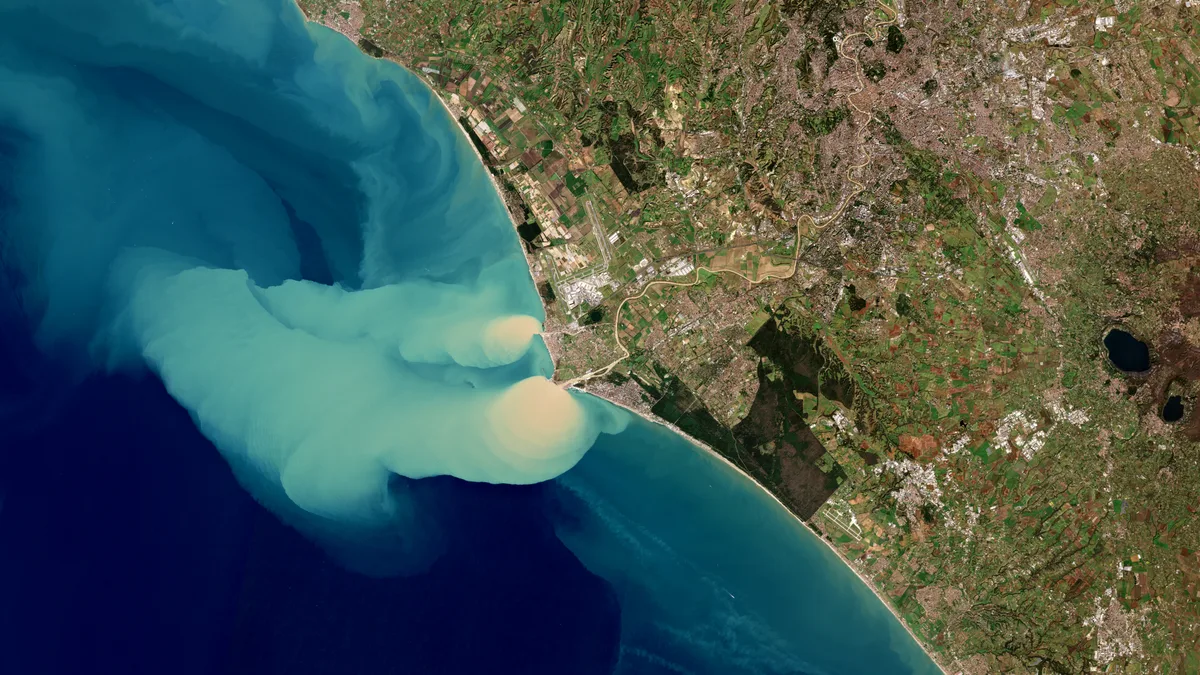
Which solutions work where, and how far has each got? We sort them into seven approaches across air, water, soil and the human body and rate each pair on one scale. After the US and Canadian microbead bans, polyethylene microbeads in the effluent of two Toronto wastewater plants fell by 86% and 76% (level C)1. No approach works across a whole system.
Seven approaches, four systems, one scale
Measurement says where particles are. Prevention keeps plastic from being released. Filtration and capture retain particles. Degradation breaks polymers down with enzymes, microbes or catalysts. Recovery collects loose plastic outdoors. Medical approaches act in the body. Policy sets the rules.
Each cell is one approach acting on one system. Drinking-water treatment counts under water; anything inside the body counts under medical. A 2024 review of twenty years of research calls for clear evidence on the efficacy of solutions (level P)2. Technology detail is on Solutions by System.
Solution status: how far a method has got
Five approaches (prevention, filtration and capture, degradation, recovery, medical) share one maturity scale. Each cell takes the most mature result we found, with its target size, endpoint and setting.
- Research: effect shown only in laboratory tests or models. Example: UV photocatalysis of polystyrene spheres on glass3.
- Pilot: effect measured in real air, water, soil or patients at small scale, not in routine use. Example: an enclosed brake on a demonstrator car4.
- Locally demonstrated under conditions: routine full-scale use somewhere, with a measured effect. Example: nanoplastic removal at three wastewater plants5.
- No demonstrated result found: our scoped search found no test for this pair; not proof that nothing exists.
- Not applicable: the approach does not act on this system by the definitions above; no status.
Whole-system reach is a separate field; it reads "no" in every cell, the home page's 0 / 4. Measurement cells say whether a standardized method exists, for which sizes. Policy cells give legal status and any measured effect; a law is not a technical pilot.
Method
Status is not evidence level. Status says how far a method has got; the level (A–E) says how sure we are about one finding, and P marks a fact checked against an official record. A pilot can rest on well-supported (B) evidence, and a locally demonstrated method carries a C if only one study measured it. Every "works" keeps its conditions: particle type and size, setting, time, retained or destroyed. Findings by level are on Evidence by Status.
Prevention acts before plastic splits between systems
Prevention is the only approach that acts before plastic is divided among air, water and soil; the size of its effect comes from models. Lau and colleagues found that all feasible interventions would cut plastic pollution by 78% relative to business as usual in 2040. Even so, 710 million metric tons (710 Mt) would enter aquatic and terrestrial ecosystems from 2016 to 2040 (scenario estimates, level C)6. Their package also includes collection and disposal.
Borrelle and colleagues estimated up to 53 Mt a year reaching aquatic ecosystems by 2030 under ambitious commitments (estimate, level C)7. MacLeod and colleagues argue that poorly reversible pollution calls for rapid emission cuts (level C)8.
Measured effects are few. In Toronto, irregular polyethylene microbeads in the effluent of two plants fell by 86% and 76% from 2016–2017 to 2018–2019, after the US (2017) and Canadian (2018) restrictions. Unregulated wax beads did not change (level C)1. The study is observational, counts from about 0.3 mm and covers one product class.
A demonstrator car with an enclosed multi-disk brake emitted about 30% fewer particles than with a conventional brake, counting all particles, not plastic (level C)4. A 2023 review says field tests of tire-wear mitigation are still needed9. Tire wear itself is estimated at 0.23–4.7 kg per person per year (estimate, level C)10. In cotton fields, biodegradable mulch film left less polyethylene and PVC microplastic in soil than conventional film (level C)11.
Elsewhere only release is measured. Washed synthetic fabric shed 124–308 mg of microfibers per kg12, and one Swedish plant lost millions of pellets (nurdles) a year13. Polypropylene feeding bottles released more particles with hotter water (level C)14.
Capture and filtration work inside closed settings
- Air: HEPA filters are rated to retain at least 99.97% of 0.3 µm particles, the most penetrating size, in air passing through them. The rating is not a test on plastic (level P)15.
- Water: three Australian wastewater plants cut nanoplastic mass (0.01–1 µm, py-GC/MS) by 91–96% (level C)5. Biofilm-coated sand retained labeled nanoplastics best in drinking-water laboratory and pilot columns; the full-plant figure is modeled (level C)16. In a laboratory test, boiling and filtering tap water harder than 120 mg/L removed at least 80% of added 0.1–150 µm particles (level C)17. An external washing-machine filter cut microfiber release by about 78% (level C)18.
- Soil: there is no stream to filter. In one pot study, iron-doped biochar lowered nanoplastics in lettuce leaves by about 60%: binding, not removal (level C)19.
Retention is not destruction. Sewage sludge may carry 63,000–430,000 metric tons of microplastics a year to European farmland, a rough extrapolation (level C)20.
Degradation and recovery: bulk PET, lab beakers and coarse debris
Breakdown works best on collected plastic. Ideonella sakaiensis uses polyethylene terephthalate (PET) as its major carbon source; Yoshida and colleagues saw it degrade a thin, low-crystallinity (1.9%) PET film over weeks at 30 °C (level C)21. An engineered enzyme depolymerized at least 90% of pretreated post-consumer PET within 10 hours at 72 °C, with 3 mg of enzyme per g of PET (level C)22. That is reactor recycling of collected PET.
For dispersed particles, results are laboratory-scale. A TiO2 film under UV light degraded 98.4% of 400 nm polystyrene spheres in 12 hours, packed dry on glass (level C)3; a 2025 review of visible-light photocatalysis finds it mostly partial (level C)23. Weight loss in microbial cultures does not prove mineralization24.
Isotope tracing does: up to 1.2% a year for UV-aged polyethylene with Rhodococcus ruber25, and 0.199% in 14 days with Bacillus velezensis26 (both level C). That second figure is about 5% a year if linear (our calculation), so neither is a ceiling; the set-ups differ.
The Ocean Cleanup reports over 45 million kg of coarse floating debris removed by the end of 2025, a self-reported figure (level C)27. We found no method that collects dispersed micro- or nanoplastics from open water, field soil or outdoor air (level E; searches R1–R3).
Medical approaches: early pilots, no proven clearance
No medical approach has been shown to clear micro- or nanoplastics from tissues (level E; search M1). Two small studies report lower circulating microplastics. After 174 plasma exchanges in 114 patients, Weinstein and colleagues report a reduction, obscured at low starting levels by particles leaching from the tubing (level C)28. In a placebo-controlled pilot, 11 adults taking chitosan for 15 days went from 1.84 to 1.34 µg/mL (level C)29.
Neither reports nanoplastics or health outcomes, and blood plastic measurements are contested30. A registered trial of double-filtration plasmapheresis lists an actual start on 12 June 2026 and had posted no results by 3 November 2026 (level P)31.
Measurement and policy enable the other five
An effect can be checked only in the size range a method counts. The EU drinking-water method counts particles from 20 µm to 5 mm (level P)32; California's first testing phase reported source-water particles from 50 µm or the method's smallest size (level P)33. In blood, py-GC/MS is currently unsuitable for polyethylene and PVC (level C)30, and a 2026 framework asks for two independent methods34.
Policy turns prevention into obligations: the US microbead ban (2015 act)35, the EU restriction on intentionally added microplastics (from October 2023)36 and the EU pellet regulation (2025)37. Euro 7 applies to new car and van types from 29 November 2026 and to new passenger-car tire types from 1 July 2028 (Article 21, level P)38.
Until 2029 its brake limit is 7 mg/km of PM10 for most cars and vans, 3 mg/km for battery-electric ones. The largest light vans (N1 Class III) get 11 mg/km, or 5 mg/km if battery-electric. Later values follow a review, and from 2035 the limit is 3 mg/km for all. It covers all brake particles, not only plastic (level P)38. Treaty talks at INC-5.2, Geneva, August 2025, were adjourned without consensus (level P)39.
Only the microbead bans have a measured effect in our search (level C)1; for the others it is not yet measured (level E; search P1). See How We Measure It, Policy & Regulation and What You Can Do.
The approach by system matrix
Each cell gives a status, the target particles, the best result and its source. We give no totals, because a cell for coarse floating debris and a cell for nanoplastic mass in wastewater are not units of the same success.
Solutions by approach and system: status on 3 November 2026
Data table
| label | value | unit | kind | status | target | note | source |
|---|---|---|---|---|---|---|---|
| Measurement · air | research methods only | measurement | research-methods | micro and nano, air | Campaigns only (one Leipzig street, two weeks); models and measurements disagree | S-061, S-052 | |
| Measurement · water | standardized method, 20 µm and above | measurement | standard | micro ≥ 20 µm; nano not covered | EU method 20 µm–5 mm in ≥ 1,000 L; California reports from 50 µm | S-132, S-194 | |
| Measurement · soil | research methods only | measurement | research-methods | micro and nano, soil | Nanoplastic methods are research tools with matrix interference | S-035, S-036 | |
| Measurement · human body | research methods only | measurement | research-methods | micro and nano, tissue | py-GC/MS unsuitable for PE and PVC in blood; two orthogonal methods advised | S-042, S-044 | |
| Prevention at source · air | pilot | intervention | pilot | brake and tire wear, all particles | Enclosed brake: about 30% fewer particles, demonstrator car on test track | S-195, S-196 | |
| Prevention at source · water | locally demonstrated | intervention | local | PE microbeads ≥ about 0.3 mm | Effluent of two Toronto plants: down 76% and 86% after microbead bans | S-192 | |
| Prevention at source · soil | pilot | intervention | pilot | microplastics from mulch film | Cotton field: less PE and PVC in soil under biodegradable mulch film | S-197 | |
| Prevention at source · human body | research | intervention | research | release into food and drink | Lab: PP feeding bottles release more when hotter; intake not measured | S-076 | |
| Filtration and capture · air | locally demonstrated | intervention | local | 0.3 µm test particles, indoor air | HEPA rated ≥ 99.97% at 0.3 µm for air passing the filter; not a plastic test | S-127 | |
| Filtration and capture · water | locally demonstrated | intervention | local | nanoplastic mass 0.01–1 µm | Three wastewater plants removed 91–96%; retained particles go to sludge | S-047, S-113, S-082 | |
| Filtration and capture · soil | research | intervention | research | model nanoplastics, pot soil | Binding, not removal: Fe-biochar cut lettuce-leaf nanoplastics about 60% | S-085 | |
| Filtration and capture · human body | not applicable | intervention | na | Blood filtration is in the medical row; drinking water in the water cell | not applicable (definition) | ||
| Degradation · air | no demonstrated result found | intervention | none-found | airborne particles | No test of degrading airborne plastic found | search R1 (this page) | |
| Degradation · water | research | intervention | research | PE and PS particles, lab | Photocatalysis mostly partial; PE mineralized 1.2%/yr in one test, 0.199%/14 d in another | S-189, S-187, S-191 | |
| Degradation · soil | research | intervention | research | microplastics, lab cultures | Weight loss in lab cultures over weeks to months; not proof of mineralization | S-190 | |
| Degradation · human body | not applicable | intervention | na | Any action inside the body is in the medical row | not applicable (definition) | ||
| Recovery · air | no demonstrated result found | intervention | none-found | outdoor air | No method found that collects particles from outdoor air | search R1 (this page) | |
| Recovery · water | locally demonstrated | intervention | local | coarse floating debris only | Over 45 million kg by end 2025 (self-reported); no micro or nano recovery found | S-116 | |
| Recovery · soil | no demonstrated result found | intervention | none-found | field soil | No field method found; lab extraction from soil serves analysis | search R2 (this page) | |
| Recovery · human body | not applicable | intervention | na | Any action inside the body is in the medical row | not applicable (definition) | ||
| Medical · air | not applicable | intervention | na | Medical approaches act only on the body | not applicable (definition) | ||
| Medical · water | not applicable | intervention | na | Medical approaches act only on the body | not applicable (definition) | ||
| Medical · soil | not applicable | intervention | na | Medical approaches act only on the body | not applicable (definition) | ||
| Medical · human body | pilot | intervention | pilot | circulating microplastics | Plasma exchange (114 patients) and chitosan (21 adults) lowered blood levels | S-111, S-175, S-112 | |
| Policy · air | adopted, applies from 29 November 2026 (brakes) and 1 July 2028 (tires) | policy | adopted | brake PM10; tire abrasion | Euro 7; no particle-level effect measured yet | S-135 | |
| Policy · water | applying; one local effect measured | policy | applying-effect | added microplastics; pellets | Microbead bans and EU restriction apply; pellet law phased in; effect measured in Toronto | S-136, S-129, S-130, S-192 | |
| Policy · soil | adopted, applies from 17 October 2031 | policy | adopted | granular infill on sports pitches | EU ban on placing granular infill on the market; no effect measured | S-129 | |
| Policy · human body | applying (monitoring only) | policy | applying | drinking water ≥ 20 µm | Monitoring rules (EU method, California testing); no limit values | S-132, S-194 |
If a filter retains 99.9% of particles, is the problem solved there?
Have microplastics laws worked?
One has a measured local effect: polyethylene microbeads in Toronto effluent fell by 76–86% after the US and Canadian bans. Effects of the other rules are not yet measured (level C,1).
How this list is maintained
Statuses are dated 3 November 2026 and reviewed at each evidence snapshot. A cell moves up only when a source shows the method at the next scale, with its conditions, and moves down if that source is corrected or contradicted. Absence statements mean "not found in this search". Report a status you think is wrong through Corrections & Contact.
Method
Searches behind the absence statements, run in Europe PMC on 3 November 2026, years 2015–2026, first 40 results by relevance screened (all if fewer). P1, rules (47 results): ABSTRACT:(microplastic* OR nanoplastic* OR microbead*) AND ABSTRACT:(ban OR bans OR regulation OR restriction OR legislation) AND ABSTRACT:("before and after" OR effectiveness OR "temporal trend" OR decline OR declined). R1, air (186): ABSTRACT:(microplastic* OR nanoplastic*) AND ABSTRACT:(atmospher* OR airborne OR "outdoor air" OR "ambient air") AND ABSTRACT:(removal OR remediation OR "capture technolog*" OR degradation OR photocataly*). R2, soil (52): TITLE:(microplastic* OR nanoplastic*) AND TITLE:(soil*) AND TITLE:(removal OR remov* OR remediation OR extraction OR "soil washing" OR separation). R3, open water (24): ABSTRACT:(microplastic* OR nanoplastic*) AND ABSTRACT:(ocean OR sea OR river OR lake OR "surface water") AND ABSTRACT:(recovery OR "clean-up" OR cleanup OR skimming OR "magnetic extraction" OR remediation) AND ABSTRACT:(field OR "full-scale" OR "full scale" OR pilot OR "in situ"). M1, body (10): ABSTRACT:(microplastic* OR nanoplastic*) AND ABSTRACT:(plasmapheresis OR "plasma exchange" OR apheresis OR chitosan OR probiotic* OR chelat* OR "dietary fiber" OR excretion) AND ABSTRACT:(human* OR patient* OR participant* OR volunteer*) AND ABSTRACT:(trial OR pilot OR randomized OR randomised OR intervention). Engineering and legal databases were not searched.
Sources
- Akhbarizadeh R, Yu JT, Ead L, Nicholls E, Thibeau J, Lanisa M et al. (2024). Reductions of Plastic Microbeads from Personal Care Products in Wastewater Effluents and Lake Waters Following Regulatory Actions. ACS ES&T Water 4(2):492–499. doi:10.1021/acsestwater.3c00526 journal article open access
- Thompson RC, Courtene-Jones W, Boucher J, Pahl S, Raubenheimer K, Koelmans AA (2024). Twenty years of microplastic pollution research—what have we learned?. Science. doi:10.1126/science.adl2746 review
- Nabi I, Bacha AUR, Li K, Cheng H, Wang T, Liu Y et al. (2020). Complete Photocatalytic Mineralization of Microplastic on TiO2 Nanoparticle Film. iScience 23(7):101326. doi:10.1016/j.isci.2020.101326 journal article open access
- Löber M, Bondorf L, Grein T, Reiland S, Wieser S, Epple F et al. (2024). Investigations of airborne tire and brake wear particles using a novel vehicle design. Environmental Science and Pollution Research 31(40):53521–53531. doi:10.1007/s11356-024-34543-9 journal article
- Okoffo ED, Thomas KV (2024). Mass quantification of nanoplastics at wastewater treatment plants by pyrolysis–gas chromatography–mass spectrometry. Water Research. doi:10.1016/j.watres.2024.121397 journal article
- Lau WWY, Shiran Y, Bailey RM, Cook E, Stuchtey MR, Koskella J et al. (2020). Evaluating scenarios toward zero plastic pollution. Science. doi:10.1126/science.aba9475 journal article
- Borrelle SB, Ringma J, Law KL, Monnahan CC, Lebreton L, McGivern A et al. (2020). Predicted growth in plastic waste exceeds efforts to mitigate plastic pollution. Science. doi:10.1126/science.aba3656 journal article
- MacLeod M, Arp HPH, Tekman MB, Jahnke A (2021). The global threat from plastic pollution. Science. doi:10.1126/science.abg5433 review
- Gehrke I, Schläfle S, Bertling R, Öz M, Gregory K (2023). Review: Mitigation measures to reduce tire and road wear particles. Science of the Total Environment 904:166537. doi:10.1016/j.scitotenv.2023.166537 review
- Kole PJ, Löhr AJ, Van Belleghem F, Ragas A (2017). Wear and Tear of Tyres: A Stealthy Source of Microplastics in the Environment. International Journal of Environmental Research and Public Health. doi:10.3390/ijerph14101265 review open access
- Liu S, Zhang A, Guo H, Min W (2026). Biodegradable mulch enhances cotton (Gossypium hirsutum L.) yield via microplastic reduction and P cycling microbes modulation. Field Crops Research 336:110217. doi:10.1016/j.fcr.2025.110217 journal article
- De Falco F, Di Pace E, Cocca M, Avella M (2019). The contribution of washing processes of synthetic clothes to microplastic pollution. Scientific Reports. doi:10.1038/s41598-019-43023-x journal article open access
- Karlsson TM, Arneborg L, Broström G, Almroth BC, Gipperth L, Hassellöv M (2018). The unaccountability case of plastic pellet pollution. Marine Pollution Bulletin. doi:10.1016/j.marpolbul.2018.01.041 journal article
- Li D, Shi Y, Yang L, Xiao L, Kehoe DK, Gun’ko YK et al. (2020). Microplastic release from the degradation of polypropylene feeding bottles during infant formula preparation. Nature Food. doi:10.1038/s43016-020-00171-y journal article
- US Environmental Protection Agency (2026). What is a HEPA filter?. US EPA. www.epa.gov/indoor-air-quality-iaq/what-hepa-filter web open access
- Pulido-Reyes G, Magherini L, Bianco C, Sethi R, von Gunten U, Kaegi R et al. (2022). Nanoplastics removal during drinking water treatment: Laboratory- and pilot-scale experiments and modeling. Journal of Hazardous Materials. doi:10.1016/j.jhazmat.2022.129011 journal article
- Yu Z, Wang JJ, Liu LY, Li Z, Zeng EY (2024). Drinking Boiled Tap Water Reduces Human Intake of Nanoplastics and Microplastics. Environmental Science & Technology Letters. doi:10.1021/acs.estlett.4c00081 journal article
- Napper IE, Barrett AC, Thompson RC (2020). The efficiency of devices intended to reduce microfibre release during clothes washing. Science of The Total Environment. doi:10.1016/j.scitotenv.2020.140412 journal article
- Aly AA, Tang J, Zanaty M, Liu C, Kulathuvayal AS, Su Y et al. (2026). Biochar Reduces Nanoplastics Uptake by Lettuce and Alleviates Its Toxicity to the Plant. Journal of Agricultural and Food Chemistry. doi:10.1021/acs.jafc.5c14785 journal article
- Nizzetto L, Futter M, Langaas S (2016). Are Agricultural Soils Dumps for Microplastics of Urban Origin?. Environmental Science & Technology. doi:10.1021/acs.est.6b04140 journal article
- Yoshida S, Hiraga K, Takehana T, Taniguchi I, Yamaji H, Maeda Y et al. (2016). A bacterium that degrades and assimilates poly(ethylene terephthalate). Science. doi:10.1126/science.aad6359 journal article
- Tournier V, Topham CM, Gilles A, David B, Folgoas C, Moya-Leclair E et al. (2020). An engineered PET depolymerase to break down and recycle plastic bottles. Nature. doi:10.1038/s41586-020-2149-4 journal article
- Stancu AG, Râpă M, Popa CL, Donțu SI, Matei E, Covaliu-Mirelă CI (2025). Degradation of Emerging Plastic Pollutants from Aquatic Environments Using TiO2 and Their Composites in Visible Light Photocatalysis. Molecules 30(15):3186. doi:10.3390/molecules30153186 review open access
- Choi J, Kim H, Ahn YR, Kim M, Yu S, Kim N et al. (2024). Recent advances in microbial and enzymatic engineering for the biodegradation of micro- and nanoplastics. RSC Advances 14(14):9943–9966. doi:10.1039/d4ra00844h review open access
- Goudriaan M, Morales VH, van der Meer MTJ, Mets A, Ndhlovu RT, van Heerwaarden J et al. (2023). A stable isotope assay with 13C-labeled polyethylene to investigate plastic mineralization mediated by Rhodococcus ruber. Marine Pollution Bulletin 186:114369. doi:10.1016/j.marpolbul.2022.114369 journal article
- Bajo K, Kolvenbach B, Corvini PFX, Fava F, Raddadi N (2026). Mineralization of 13C-labeled polyethylene by marine Bacillus velezensis MT9. International Biodeterioration & Biodegradation 209:106294. doi:10.1016/j.ibiod.2026.106294 journal article
- The Ocean Cleanup (2025). Year in Review: The Ocean Cleanup Continues to Break Records. The Ocean Cleanup. theoceancleanup.com/updates/2025-in-review-the-ocean-cleanup/ press open access
- Weinstein R, Yuksel ZS, Anderson C, Grant D, Milius P, Waldron K et al. (2026). Can Plasma Exchange Be Used to Lower the Circulating Burden of Microplastics in Human Patients?. Journal of Clinical Apheresis. doi:10.1002/jca.70135 journal article
- Cornelli U, Belcaro G, Casella C (2026). Reduction in Circulating Microplastics in Humans Following Gastrointestinal Sequestration by Chitosan: A Pilot Controlled Study. Journal of Xenobiotics 16(3):92. doi:10.3390/jox16030092 journal article open access
- Rauert C, Charlton N, Bagley A, Dunlop SA, Symeonides C, Thomas KV (2025). Assessing the Efficacy of Pyrolysis–Gas Chromatography–Mass Spectrometry for Nanoplastic and Microplastic Analysis in Human Blood. Environmental Science & Technology. doi:10.1021/acs.est.4c12599 journal article open access
- Proxima Health, Inc. (2026). Removal of Microplastics, Nanoplastics, and PFAS From Human Peripheral Blood Via Double-Filtration Plasmapheresis (DFPP-MNP). ClinicalTrials.gov. clinicaltrials.gov/study/NCT07658443 dataset open access
- European Commission (2024). Commission Delegated Decision (EU) 2024/1441 of 11 March 2024 supplementing Directive (EU) 2020/2184 by laying down a methodology to measure microplastics in water intended for human consumption. Official Journal of the European Union. eur-lex.europa.eu/eli/dec_del/2024/1441/oj web open access
- California State Water Resources Control Board (2022). Policy Handbook Establishing a Standard Method of Testing and Reporting of Microplastics in Drinking Water (adopted 7 September 2022). California State Water Resources Control Board. www.waterboards.ca.gov/drinking_water/certlic/drinkingwater/docs/2022/mp-hndbk.pdf report open access
- Thomas KV, Belz S, Booth AM, Clift MJD, Cross RK, Davies G et al. (2026). Communicating Confidence in the Reliability of Micro- and Nanoplastic Identification in Human Health Studies. Environment & Health. doi:10.1021/envhealth.5c00671 journal article
- United States Congress (2015). Microbead-Free Waters Act of 2015 (Public Law 114-114; H.R. 1321). US Congress. www.congress.gov/bill/114th-congress/house-bill/1321 web open access
- European Commission (2023). Commission Regulation (EU) 2023/2055 of 25 September 2023 amending Annex XVII to Regulation (EC) No 1907/2006 (REACH) as regards synthetic polymer microparticles. Official Journal of the European Union. eur-lex.europa.eu/eli/reg/2023/2055/oj web open access
- European Parliament, Council of the European Union (2025). Regulation (EU) 2025/2365 of the European Parliament and of the Council of 12 November 2025 on preventing plastic pellet losses to reduce microplastic pollution. Official Journal of the European Union (OJ L, 26.11.2025). eur-lex.europa.eu/eli/reg/2025/2365/oj web open access
- European Parliament, Council of the European Union (2024). Regulation (EU) 2024/1257 on type-approval of motor vehicles and engines ... with respect to their emissions and battery durability (Euro 7). Official Journal of the European Union. eur-lex.europa.eu/eli/reg/2024/1257/oj web open access
- Geneva Environment Network (2026). International Cooperation on Plastic Pollution (update page). Geneva Environment Network. www.genevaenvironmentnetwork.org/resources/updates/international-cooperation-on-plastic-pollution/ web open access
- Kaushik A, Peter AE, van Pinxteren M, Scholz-Böttcher BM, Herrmann H (2025). Composition, interactions and resulting inhalation risk of micro- and nano-plastics in urban air. Communications Earth & Environment. doi:10.1038/s43247-025-02980-0 journal article open access
- Evangelou I, Bucci S, Stohl A (2026). Atmospheric microplastic emissions from land and ocean. Nature. doi:10.1038/s41586-025-09998-6 journal article
- Santos FA, Andre RS, Alvarenga AD, Alves ALMM, Correa DS (2025). Micro- and nanoplastics in the environment: a comprehensive review on detection techniques. Environmental Science: Nano. doi:10.1039/d4en00319e review
- Hossain R, Sahajwalla V (2026). A comprehensive toolkit for micro- to nanoplastic analysis. Environmental Science: Nano. doi:10.1039/d5en00856e review open access
Evidence levels and provenance
- AConsensus
- Multiple independent studies or a systematic review plus a statement by a scientific body.
- BWell supported
- Several independent studies with concordant findings.
- CLimitedUsed on this page
- Few studies, narrow conditions, or methodological caveats.
- DDisputed
- Conflicting results; both sides are shown.
- EUnknownUsed on this page
- No reliable evidence found; the search scope is stated.
- PProvenanceUsed on this page
- Provenance: checked against the primary record. A separate category, not an evidence grade: used for bibliographic facts, legal texts, official metadata, definitions quoted from a standard, the site's own arithmetic and statements about the site's process.
Editorial categories of this site. A–E grade scientific findings, per claim, with a one-line rationale; D and E are not lower rungs of the A–C scale. P is not a grade: it marks facts checked against their primary record.