THE LEAST MEASURED SINK
Soil
Farmland receives plastic from sludge, mulch film, compost, roads and the air, and much of it stays in topsoil. Experiments show effects on soil and uptake by plants, mostly at doses far above field levels. The few field measurements of nanoplastics we found are from compost-amended French fields.
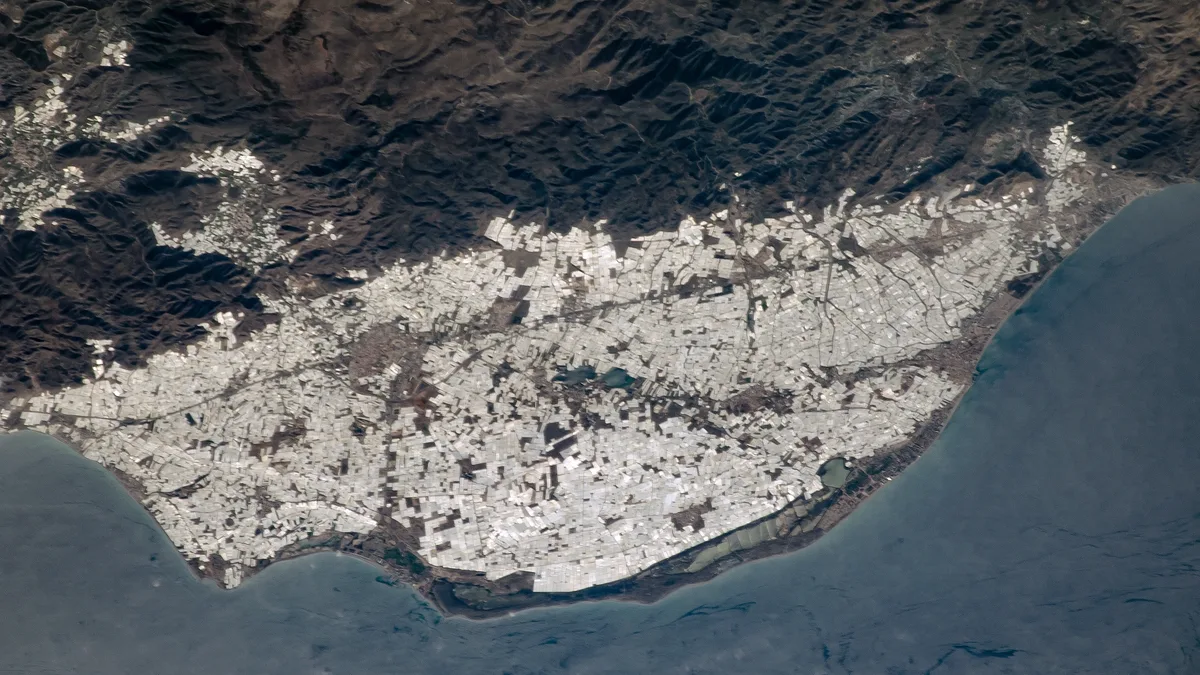
Soil receives plastic from sewage sludge, farm film, compost, roads and the air, and much of it stays where it lands. A 2016 estimate put the microplastic sludge carries each year to farmland at 63,000–430,000 metric tons (t) in Europe and 44,000–300,000 t in North America. Together, its authors noted, this exceeds the 93,000–236,000 t then estimated to float on the whole ocean surface1,2. This sets a yearly flow against a standing stock, both estimates; newer ocean figures are on Oceans. Effects on soil are known mostly from experiments at doses far above field levels, and field measurements of nanoplastics are only beginning.
63,000–430,000 t/yr
microplastic estimated to reach European farmland in sewage sludge
Europe, farmland receiving sewage sludge; rough extrapolation published 2016; microplastics1
estimate, not measurement; a 2022 estimate for 1–5 mm particles only gives 31,000–42,000 t/yr
CLimited1.5–6.6 Mt
first estimate of the microplastic stock in the world's farm soils
irrigated and plastic-covered farmland only, 0–1 m depth, compost excluded; median abundances from 442 sites in 43 articles, counts converted to mass with shape models; 20233
authors call it a first step; we found no comparable estimate for nanoplastics
CLimited12.5 Mt
plastic products used in plant and animal production in 2019
global; crops and livestock 10 Mt, fisheries and aquaculture 2.1 Mt, forestry 0.2 Mt; food packaging (37.3 Mt) excluded; FAO assessment4
single agency estimate compiled from industry and literature data
CLimited≈1,076 particles/kg
microplastic in Chinese soils after 24 years of continuous mulching
mulched fields in China, compared with ≈80 particles/kg after 5 years; polymers matched the film; 20205
CLimited123 µg/g
polystyrene nanoplastics in roots of a grass on a compost-amended field
Holcus lanatus, Loire floodplain, France, decades of compost amendment; shoots 32 µg/g, below the quantification limit; dry weight; matrix-matched py-GC/MS; polystyrene only; 20266
single site with a heavy plastic history, not a survey; topsoil 2.57 µg/g in the 200–1,000 nm fraction, about 28 times a reference plot
CLimitedPlastic reaches soil from farms, sewage, roads and air
For the European Union, Horton and colleagues estimated that 473,000–910,000 t of plastic a year stays on land7. That is 4–23 times the estimated release to the ocean. It counts mismanaged waste of all sizes plus sludge microplastic, so it is not a measure of microplastic in soil (level C).
Sewage sludge. Wastewater plants concentrate microplastic in their sludge; in one primary settling tank, 96% of 1–5 mm particles ended up there8,9. Spread as fertilizer (biosolids), sludge carries them to fields. On 16 fields in eastern Spain, each application added about 700 microplastic particles per kg of soil9. On two German fields, plastic loads were still higher 34 years after the last application10. Independent field studies in two countries thus find the sludge signal (level B).
How much arrives each year is less certain. Estimates for Europe run from 31,000–42,000 t/yr, counting only 1–5 mm particles, to 63,000–430,000 t/yr8,1. Both are extrapolations, not measurements (level C).
Mulch film. Plant and animal production used 12.5 million metric tons (12.5 Mt) of plastic products in 2019; crops and livestock took 10 Mt, fisheries, aquaculture and forestry the rest. More than 2 Mt of mulch film is used each year worldwide, a 2018 industry figure4. In China, microplastic in mulched soils rose from about 80 to about 1,076 particles per kg after 5 and 24 years of continuous mulching5.
Compost and digestate. Fertilizer from biowaste plants in Germany held 14–895 plastic particles larger than 1 mm per kg dry weight; digestate from energy crops held almost none11.
Roads and air. Tire wear emits an estimated 0.23–4.7 kg per person per year to all compartments; how much reaches soil depends on road type and drainage12. In the western United States, more than 1,000 t of microplastic a year settles on protected lands from the air, and soils are also a source of resuspended particles13.
Irrigation. Wastewater used to water crops is a further route. A 2025 review compiles particle counts in wastewater reused on farms, but we found no estimate of the mass it delivers to soil14.
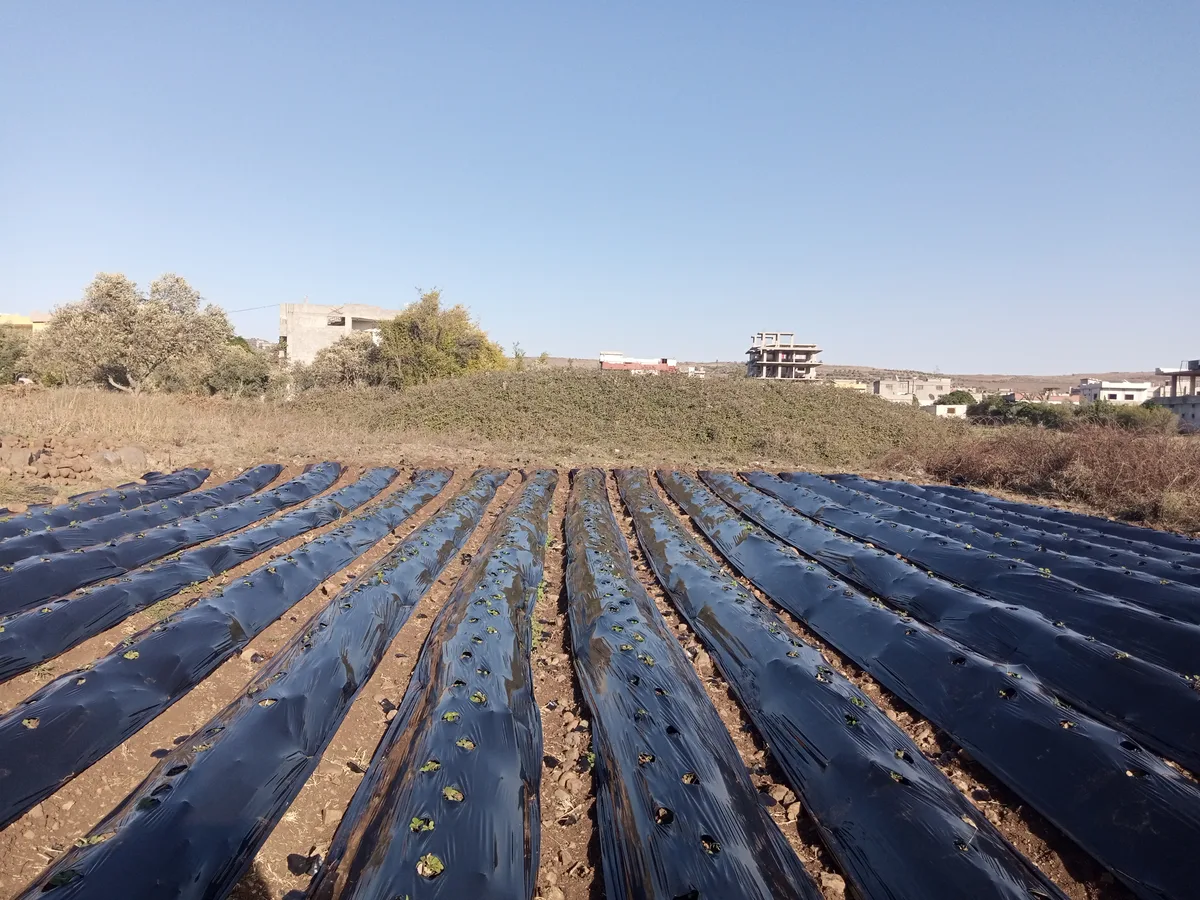
How plastic gets into soil, and what we know about each route
Data table
| label | value | unit | kind | level | source |
|---|---|---|---|---|---|
| sewage sludge (biosolids): field signal | more microplastic where sludge was spread (16 fields in Spain, 2 in Germany) | input | B | S-256, S-257 | |
| sewage sludge (biosolids): amount | 31,000–430,000 t/yr to European farmland (two estimates, different size ranges) | input | C | S-082, S-360 | |
| plastic mulch film | no mass flux to soil estimated; >2 Mt of mulch film used per year worldwide | input | C | S-083, S-363 | |
| compost and digestate | 14–895 particles >1 mm per kg dry weight (Germany); nanoplastics found in compost-amended French fields | input | C | S-362, S-377, S-266 | |
| atmospheric deposition | >1,000 t/yr on western US protected lands | input | C | S-049 | |
| tire wear near roads | 0.23–4.7 kg per person per year emitted to all compartments; share reaching soil not quantified | input | C | S-122 | |
| irrigation with wastewater | particle counts in reused wastewater reported; no mass flux to soil found | input | E | S-380 | |
| plowing, earthworms, water | move particles down; microplastic found to 90 cm in sludge fields; about 1% of PET below 8 cm in two years in a Swiss field test | internal | C | S-257, S-284, S-378 | |
| plant roots | uptake of particles <1 µm in lab and pot experiments; polystyrene nanoplastics in roots of field grass at one site | output | B | S-084, S-368, S-371, S-266 | |
| groundwater (observed compartment, link to soil not traced) | 0.021–0.203 µg/L nanoplastics at six riverbank-filtration sites, Fuhe River, China | observed | C | S-034 |
Effects on soil appear mostly at high test doses
In a five-week garden experiment, de Souza Machado and colleagues mixed four microplastic types into a loamy sand at up to 2% of soil weight. The authors described this level as environmentally relevant. Bulk density, water holding capacity and the link between microbial activity and stable soil crumbs all changed, and the size of the change depended on the particle type22 (level C).
Earthworm tests used far more plastic. Lumbricus terrestris fed polyethylene (PE) particles below 150 µm in leaf litter died more often and grew more slowly at 28% plastic in the litter and above, but not at 7%23. The worms concentrated particles below 50 µm in their casts.
A screening of 106 datasets found effects mainly at 0.1–10% of soil dry weight and derived a provisional no-effect level of 520–655 mg/kg24. Most surveyed farm and garden soils held below about 13,000 particles and 4.5 mg of microplastic per kg25. A 2025 review draws the same contrast: test doses of up to 50% by volume against field levels typically below 0.1% by weight26. The studies cited here do not establish effects at field-typical concentrations (level C).
Limitation
Lab dose vs field dose. The 2% dose in the garden experiment is 20,000 mg/kg, at least 4,400 times the 4.5 mg/kg below which most surveyed farm soils fall (level P: our calculation from22 and25). Field values are often modeled from particle shape rather than weighed, and hotspots such as industrial sites run 100 to 10,000 times higher than common levels25. Nearly all of these numbers are for microplastics; field concentrations of nanoplastics are reported for very few soils.
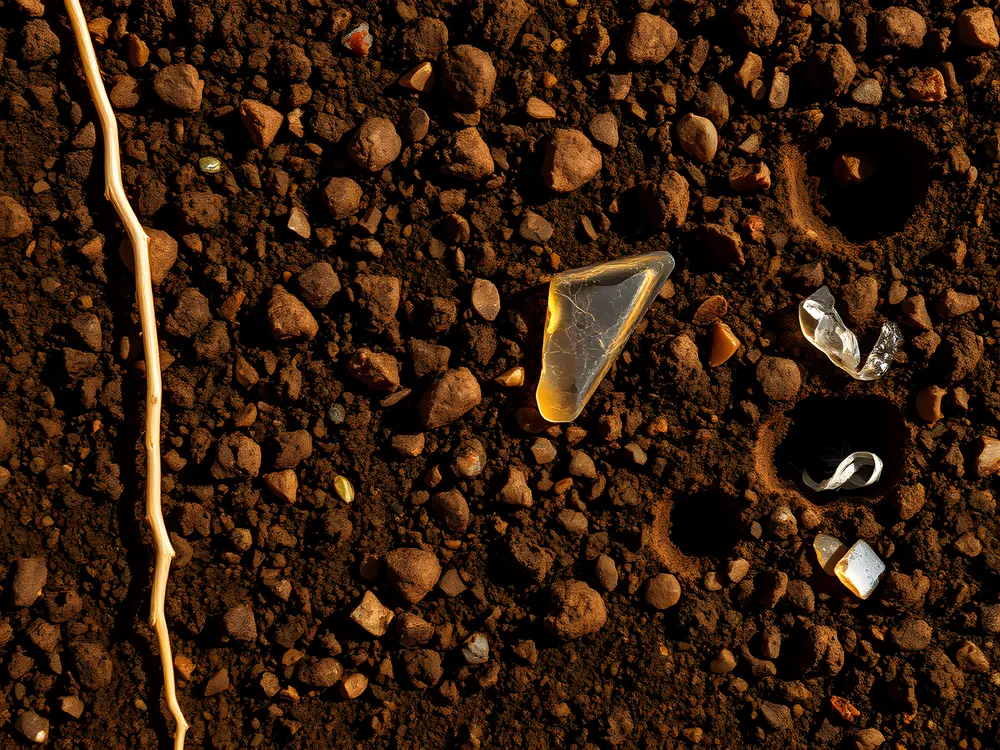 Illustration
Plants take up nanoplastics in the lab; field evidence is thin
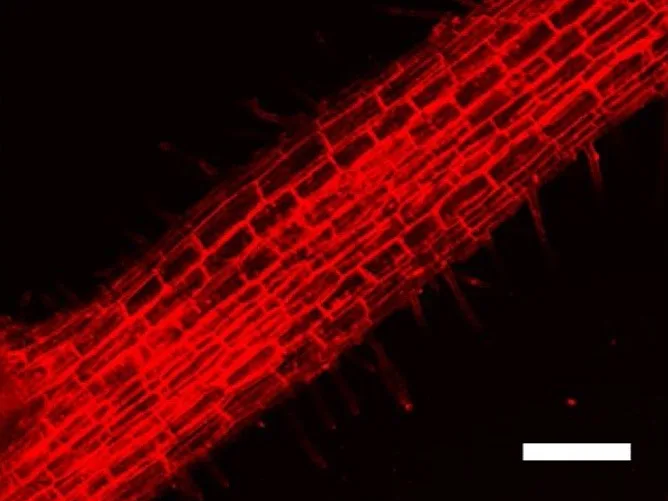
Hydroponics and sand. Li and colleagues grew wheat and lettuce in treated wastewater and in sand or sandy soil. Fluorescent 0.2 µm polystyrene (PS) beads entered the roots through cracks where side roots emerge, then moved to the shoots18. Sun and colleagues found both positively and negatively charged PS nanoplastics accumulating in Arabidopsis; negatively charged ones reached the xylem, the plant's water pipes19.
With europium-doped 100 nm PS instead of dyes, lettuce kept most particles in its roots; leaf transfer was measurable only at the highest dose, 1,500 µg/L20. Several independent groups using different labels thus find root uptake in the laboratory (level B). Taylor and colleagues saw PS particles pile up on root caps of Arabidopsis and wheat without entry27. Particles, media and imaging differ, so this contrasts with the others rather than failing to replicate them.
Pots of soil. Rice and peanuts in soil with 250 mg/kg PS nanoplastics carried particles into their grains28. Pumpkins exposed to radiolabeled PS particles about 20 nm across (1 µg/L and 1 mg/L) carried them to the anthers. Pollen viability fell; the abstract does not say at which dose29 (level C). In a standardized test, tomatoes took 210 nm palladium-doped PS particles into roots and shoots within eight days, from artificial soil spiked at 400 and 4,000 mg/kg30.
Harvested crops. A 2024 study reported 101–463 mg/kg dry weight of PE "nanoplastics" in four vegetables by pyrolysis gas chromatography with mass spectrometry (py-GC/MS)31. Its abstract gives recoveries for standards only and does not say how particles below 1 µm were separated. We could not check crop origin or sample numbers. In blood, natural compounds can inflate this method's PE and PVC signals32. That calls for crop-specific checks; it does not show the crop values are wrong (level C).
Field soil. Ryzhenko and colleagues (2026) quantified PS nanoplastics on a Loire floodplain field in France amended with compost for decades. By matrix-matched py-GC/MS, the 200–1,000 nm fraction of the topsoil held 2.57 µg/g dry weight, about 28 times a reference plot. A grass growing there (Holcus lanatus) held 123 µg/g dry weight in roots and 32 µg/g in shoots, below the quantification limit6. It is one site and one polymer (level C).
Whether food crops from ordinary fields contain nanoplastics is not established; uptake in hydroponics is not plastic in our food.
Down the profile toward groundwater
Earthworms carried PE microbeads downward in a greenhouse test, small ones furthest16. In sand columns, 21 µm PE particles moved deepest, and each wet-dry cycle pushed them further. The authors' model projected an average of 5.24 m in 100 years across 347 Chinese cities, an estimate for microplastics in sand34.
A two-year field test points the other way. In 45 repacked loam columns set into a Swiss arable field, PET fragments (65–125 µm) and fibers (0.5–2 mm long) were mixed at 1% of weight into the top 2 cm. About 1% reached below 8 cm, and pore structure changed over time whether or not plastic was present17. Polymer, shape, soil and duration differ from the sand columns, so neither result describes soils in general (level C).
On the German sludge fields, microplastic was found down to 90 cm, at 0–56 particles per kg, with plowing as the main spreader10. In a French field amended with household-waste compost in 1990, nanoplastic able to move with soil water was estimated from strontium isotopes at about 0.25 µg/kg down to 55 cm. Polypropylene nanoplastics were identified in that soil water by py-GC/MS. The authors note this is the mobile fraction, not the total in soil15 (level C).
Nanoplastic mass has also been measured in groundwater. At six sites on the Fuhe River in China, Xu and colleagues found 0.021–0.203 µg/L in groundwater against 0.283–0.793 µg/L in surface water, and attributed the difference to filtration through riverbanks21. It is one study, and it does not trace the particles to soil (level C).
Why soil is hard to measure
Soil is full of organic matter that interferes with plastic detection, so it must be digested first. That keeps samples small, usually below 100 g of dry soil, which limits how well they represent a field35. Methods are not standardized, and extraction can itself break particles apart35.
The first reported nanoplastic identification in soil needed size fractionation plus py-GC/MS36. Mass is often estimated from particle counts and shapes rather than weighed25. The instruments and their size limits are explained on How We Measure It.
What is uncertain
The only global stock figure is 1.5–6.6 Mt of microplastic in agricultural soils. It rests on 442 sampling sites from 43 articles, covers only irrigated and plastic-covered farmland to 1 m depth, leaves out compost and converts counts to mass with shape models. Its authors call it a first step3 (level C). The two annual sludge estimates for Europe differ about tenfold at their upper ends and count different size ranges1,8 (level P: our comparison of the published ranges).
Estimates of microplastic going to soil, and the ocean surface for scale
Data table
| label | value | unit | high | kind | sizes | source |
|---|---|---|---|---|---|---|
| Sludge to European farmland, per year (2016) | 63 | kt | 430 | annual input | microplastics, as in source data | S-082 |
| Sludge to European soils, per year (2022) | 31 | kt | 42 | annual input | 1–5 mm only | S-360 |
| Sludge to North American farmland, per year (2016) | 44 | kt | 300 | annual input | microplastics, as in source data | S-082 |
| Floating on the world ocean surface (2014 estimate, published 2015) | 93 | kt | 236 | standing stock | small floating plastic | S-359 |
| In the world's agricultural soils (2023) | 1500 | kt | 6600 | standing stock | microplastics; irrigated and plastic-covered farmland, 0–1 m, compost excluded | S-361 |
For nanoplastics, field data now exist but cover very little ground. We found three studies, all by one French team on fields amended with household-waste compost36,15,6. They give a qualitative identification (2021), an isotope-based estimate of the mobile fraction (2024) and a py-GC/MS quantification of polystyrene (2026) (level C). We found no representative survey of nanoplastic mass or particle number across ordinary farm soils, and no regional or global estimate (level E).
Search of 3 November 2026: Europe PMC titles and abstracts, nanoplastic, soil, field and quantification terms, 2016–2026 (45 records screened); Crossref; the open web; the team's publications; our registry. We also found no field study of nanoplastic effects on soil life or yields (level E).
Questions
Does spreading sewage sludge put plastic on farmland?
Can vegetables take up nanoplastics from soil?
In laboratory and pot experiments with model polystyrene particles, yes, mostly into roots and less into shoots and grains. On one compost-amended field in France, a grass held polystyrene nanoplastics mainly in its roots. Whether food crops from ordinary fields contain nanoplastics is not established: one study reports high values with a method that still needs crop-specific checks. (level C,20,28,6,31) What this means for diet is on the Human Body page.
Does plastic harm soil?
At test doses of about 0.1% to several percent of soil weight, microplastics change soil structure, water retention and earthworm survival. A two-year Swiss field test with PET at 1% found little change in pore structure. At the much lower concentrations common in surveyed fields, harm is not established by the studies we cite. (level C,22,24,25,17)
Does anyone know how much plastic is in the world's soils?
Where to go next
Plastic settling from the air is on Atmosphere; runoff to rivers and the sea is on Oceans. Crop uptake and diet are on Human Body. In one 2026 study, iron-doped biochar (3% of soil weight) cut nanoplastic in lettuce leaves by about 60%, from 0.90 to 0.36 mg/kg37; that is on Solutions by System. Rules for sludge and mulch film are on Policy & Regulation.
Sources
- Nizzetto L, Futter M, Langaas S (2016). Are Agricultural Soils Dumps for Microplastics of Urban Origin?. Environmental Science & Technology. doi:10.1021/acs.est.6b04140 journal article
- van Sebille E, Wilcox C, Lebreton L, Maximenko N, Hardesty BD, van Franeker JA et al. (2015). A global inventory of small floating plastic debris. Environmental Research Letters. doi:10.1088/1748-9326/10/12/124006 journal article
- Kedzierski M, Cirederf-Boulant D, Palazot M, Yvin M, Bruzaud S (2023). Continents of plastics: An estimate of the stock of microplastics in agricultural soils. Science of The Total Environment. doi:10.1016/j.scitotenv.2023.163294 journal article
- FAO (2021). Assessment of agricultural plastics and their sustainability: A call for action. Food and Agriculture Organization of the United Nations (FAO). doi:10.4060/cb7856en report open access
- Huang Y, Liu Q, Jia W, Yan C, Wang J (2020). Agricultural plastic mulching as a source of microplastics in the terrestrial environment. Environmental Pollution. doi:10.1016/j.envpol.2020.114096 journal article
- Ryzhenko N, Dia A, Pattier M, Davranche M (2026). From compost-amended soil to plant tissues: field quantification of environmentally relevant polystyrene nanoplastics and limited translocation in Holcus lanatus L.. NanoImpact 44:100647 (online 19 September 2026). doi:10.1016/j.impact.2026.100647 journal article open access
- Horton AA, Walton A, Spurgeon DJ, Lahive E, Svendsen C (2017). Microplastics in freshwater and terrestrial environments: Evaluating the current understanding to identify the knowledge gaps and future research priorities. Science of The Total Environment. doi:10.1016/j.scitotenv.2017.01.190 review
- Lofty J, Muhawenimana V, Wilson CAME, Ouro P (2022). Microplastics removal from a primary settler tank in a wastewater treatment plant and estimations of contamination onto European agricultural land via sewage sludge recycling. Environmental Pollution. doi:10.1016/j.envpol.2022.119198 journal article
- van den Berg P, Huerta-Lwanga E, Corradini F, Geissen V (2020). Sewage sludge application as a vehicle for microplastics in eastern Spanish agricultural soils. Environmental Pollution 261:114198. doi:10.1016/j.envpol.2020.114198 journal article
- Weber CJ, Santowski A, Chifflard P (2022). Investigating the dispersal of macro- and microplastics on agricultural fields 30 years after sewage sludge application. Scientific Reports 12:6401. doi:10.1038/s41598-022-10294-w journal article open access
- Weithmann N, Möller JN, Löder MGJ, Piehl S, Laforsch C, Freitag R (2018). Organic fertilizer as a vehicle for the entry of microplastic into the environment. Science Advances. doi:10.1126/sciadv.aap8060 journal article open access
- Kole PJ, Löhr AJ, Van Belleghem F, Ragas A (2017). Wear and Tear of Tyres: A Stealthy Source of Microplastics in the Environment. International Journal of Environmental Research and Public Health. doi:10.3390/ijerph14101265 review open access
- Brahney J, Hallerud M, Heim E, Hahnenberger M, Sukumaran S (2020). Plastic rain in protected areas of the United States. Science. doi:10.1126/science.aaz5819 journal article
- Carpanez TG, Castro LMC, Amaral MCS, Moreira VR (2025). Occurrence and environmental consequences of microplastics and nanoplastics from agricultural reuse of wastewater and biosolids in the soil ecosystem: A review. Science of The Total Environment. doi:10.1016/j.scitotenv.2025.179538 review
- Wahl A, Davranche M, Dia A, Vilbert D, Khatib I, Pattier M et al. (2024). Nano(micro)plastic mobility in soil: Metallic additives and Sr isotopes as potential tracers. Journal of Hazardous Materials. doi:10.1016/j.jhazmat.2024.135153 journal article open access
- Rillig MC, Ziersch L, Hempel S (2017). Microplastic transport in soil by earthworms. Scientific Reports 7:1362. doi:10.1038/s41598-017-01594-7 journal article open access
- Schefer RB, Koestel J, Mitrano DM (2025). Minimal vertical transport of microplastics in soil over two years with little impact of plastics on soil macropore networks. Communications Earth & Environment. doi:10.1038/s43247-025-02237-w journal article open access
- Li L, Luo Y, Li R, Zhou Q, Peijnenburg WJGM, Yin N et al. (2020). Effective uptake of submicrometre plastics by crop plants via a crack-entry mode. Nature Sustainability. doi:10.1038/s41893-020-0567-9 journal article
- Sun XD, Yuan XZ, Jia Y, Feng LJ, Zhu FP, Dong SS et al. (2020). Differentially charged nanoplastics demonstrate distinct accumulation in Arabidopsis thaliana. Nature Nanotechnology. doi:10.1038/s41565-020-0707-4 journal article
- Zantis LJ, Kazour M, Borchi C, Agati R, Colpaert R, Gimbert F et al. (2024). Quantitative tracking of nanoplastics along the food chain from lettuce (Lactuca sativa) to snails (Cantareus aspersus). Science of The Total Environment. doi:10.1016/j.scitotenv.2024.176848 journal article
- Xu Y, Ou Q, Jiao M, Liu G, van der Hoek JP (2022). Identification and Quantification of Nanoplastics in Surface Water and Groundwater by Pyrolysis Gas Chromatography–Mass Spectrometry. Environmental Science & Technology. doi:10.1021/acs.est.1c07377 journal article
- de Souza Machado AA, Lau CW, Till J, Kloas W, Lehmann A, Becker R et al. (2018). Impacts of Microplastics on the Soil Biophysical Environment. Environmental Science & Technology. doi:10.1021/acs.est.8b02212 journal article
- Huerta Lwanga E, Gertsen H, Gooren H, Peters P, Salánki T, van der Ploeg M et al. (2016). Microplastics in the Terrestrial Ecosystem: Implications for Lumbricus terrestris (Oligochaeta, Lumbricidae). Environmental Science & Technology. doi:10.1021/acs.est.5b05478 journal article
- Kim SW, Rillig MC (2021). Research trends of microplastics in the soil environment: Comprehensive screening of effects. Soil Ecology Letters. doi:10.1007/s42832-021-0077-3 review
- Büks F, Kaupenjohann M (2020). Global concentrations of microplastics in soils – a review. SOIL. doi:10.5194/soil-6-649-2020 review open access
- Boctor J, Hoyle FC, Farag MA, Ebaid M, Walsh T, Whiteley AS et al. (2025). Microplastics and nanoplastics: fate, transport, and governance from agricultural soil to food webs and humans. Environmental Sciences Europe. doi:10.1186/s12302-025-01104-x review open access
- Taylor SE, Pearce CI, Sanguinet KA, Hu D, Chrisler WB, Kim YM et al. (2020). Polystyrene nano- and microplastic accumulation at Arabidopsis and wheat root cap cells, but no evidence for uptake into roots. Environmental Science: Nano. doi:10.1039/d0en00309c journal article
- Jiang M, Wang B, Ye R, Yu N, Xie Z, Hua Y et al. (2022). Evidence and Impacts of Nanoplastic Accumulation on Crop Grains. Advanced Science. doi:10.1002/advs.202202336 journal article open access
- Piovesan A, Quartieri S, Faleri C, Bellingeri A, Nepi M, Al Sid Cheikh M et al. (2026). Translocation of nanoplastics from soil to crops impairs pollen viability with potential implications to pollinators. Environmental Science: Nano. doi:10.1039/d5en00969c journal article
- Beggio G, Roman M, Mitrano DM, Bravin MN, Ndiforngu ASN, Sandon A et al. (2025). A standardized soil-based biotest to investigate the phytoavailability of nanoplastics. Environmental Science: Nano. doi:10.1039/d5en00328h journal article open access
- Ye Q, Wu Y, Liu W, Ma X, He D, Wang Y et al. (2024). Identification and quantification of nanoplastics in different crops using pyrolysis gas chromatography-mass spectrometry. Chemosphere. doi:10.1016/j.chemosphere.2024.141689 journal article
- Rauert C, Charlton N, Bagley A, Dunlop SA, Symeonides C, Thomas KV (2025). Assessing the Efficacy of Pyrolysis–Gas Chromatography–Mass Spectrometry for Nanoplastic and Microplastic Analysis in Human Blood. Environmental Science & Technology. doi:10.1021/acs.est.4c12599 journal article open access
- Li L., Luo Y., Peijnenburg W. J. G. M., Li R., Yang J., Zhou Q. (2020). Confocal measurement of microplastics uptake by plants. MethodsX 7: 100750. doi:10.1016/j.mex.2019.11.023 journal article open access
- O'Connor D, Pan S, Shen Z, Song Y, Jin Y, Wu WM et al. (2019). Microplastics undergo accelerated vertical migration in sand soil due to small size and wet-dry cycles. Environmental Pollution. doi:10.1016/j.envpol.2019.03.092 journal article
- Krystek P, Koelmans AA, Quik J, Swart E, Krause S, Legler J et al. (2025). Micro-and nanoplastics in soil: New insights, knowledge gaps and challenges. Chemosphere. doi:10.1016/j.chemosphere.2025.144117 review
- Wahl A, Le Juge C, Davranche M, El Hadri H, Grassl B, Reynaud S et al. (2021). Nanoplastic occurrence in a soil amended with plastic debris. Chemosphere. doi:10.1016/j.chemosphere.2020.127784 journal article
- Aly AA, Tang J, Zanaty M, Liu C, Kulathuvayal AS, Su Y et al. (2026). Biochar Reduces Nanoplastics Uptake by Lettuce and Alleviates Its Toxicity to the Plant. Journal of Agricultural and Food Chemistry. doi:10.1021/acs.jafc.5c14785 journal article
Evidence levels and provenance
- AConsensus
- Multiple independent studies or a systematic review plus a statement by a scientific body.
- BWell supportedUsed on this page
- Several independent studies with concordant findings.
- CLimitedUsed on this page
- Few studies, narrow conditions, or methodological caveats.
- DDisputed
- Conflicting results; both sides are shown.
- EUnknownUsed on this page
- No reliable evidence found; the search scope is stated.
- PProvenanceUsed on this page
- Provenance: checked against the primary record. A separate category, not an evidence grade: used for bibliographic facts, legal texts, official metadata, definitions quoted from a standard, the site's own arithmetic and statements about the site's process.
Editorial categories of this site. A–E grade scientific findings, per claim, with a one-line rationale; D and E are not lower rungs of the A–C scale. P is not a grade: it marks facts checked against their primary record.